
Anyone who follows teer for more than a few days quickly learns one thing. The number you need most often is not the one coming tomorrow. It is the teer result yesterday. Yesterday’s numbers settle disputes at the counter, they confirm whether a ticket was worth anything, and they are the starting point of every personal record a serious follower keeps. This guide is written from the point of view of those seasoned followers. It explains how they track and record past results day by day, how they structure their archives by date and market, how the daily rhythm of morning and evening sessions works, and how you can look up any past day’s result methodically and calmly.
Why the Teer Result Yesterday Matters More Than You Think
New followers tend to look forward. They ask what the next number might be. Experienced followers look backward first, because the yesterday teer result is the most practical piece of information in the whole game. When you held a ticket from yesterday, only yesterday’s figures tell you whether it won. When someone quotes a number at the counter, only the recorded result settles the question of who is right. And when you keep your own records, yesterday’s entry is the one you write most carefully, because every archive is built one day at a time.
There is another reason the teer result yesterday gets so much attention. It is the freshest piece of confirmed data available. Today’s rounds may still be pending, but yesterday is complete. Both rounds for every market have been declared, checked against official announcements, and filed away. That completeness makes yesterday’s record a reliable reference point. A seasoned follower never works from memory when the confirmed figures are available in writing.
The habit of checking the yesterday teer result also protects you from a very common mistake. Rumours travel fast in teer circles. Someone in a market crowd or a chat group will confidently announce a number, and it spreads. The follower who checks the recorded result before believing anything is never caught out. The archive does not argue and it does not forget. That is why the first skill of an experienced follower is not finding today’s number faster, but knowing exactly where yesterday’s numbers are written down.
The Daily Rhythm of Teer Sessions
Before you can keep good records, you need to understand the rhythm of the day. Teer is played in sessions, and each market declares results more than once per day. The main markets that followers track are Shillong teer, Juwai teer and Khanapara teer. Each of these runs a morning session, a day session in the afternoon, and an evening or night session. Every session has two rounds of shooting, called the first round and the second round, usually written as FR and SR.
Think of the day as a repeating cycle. In the morning session, archers shoot in the first round and the result is declared. Later, the second round of the same session is shot and declared. The same pattern repeats in the afternoon session and again in the evening session. So when you record a single day, you are not writing down one number. You are writing down six numbers per market if you follow all sessions, or fewer if you only follow the main sessions. A beginner writes “yesterday’s number”. An experienced follower writes the market, the session, the round, and then the number. Precision is the whole difference.
It helps to picture the day on a simple timeline. Morning brings the first declarations of the day. The middle of the day brings the next set. The evening brings the last. Seasoned followers know this rhythm by heart, and they plan their record keeping around it. They do not wait until late at night and try to remember everything. They note each session’s outcome as it happens, or they check the consolidated list once the day’s sessions are complete and fill in every slot in one sitting.
One more thing about rhythm. Teer does not run on Sundays in most markets, and there are occasional holidays and pauses. An experienced follower’s diary shows these gaps honestly. Where a beginner leaves a blank space and later wonders whether they missed something, the seasoned record keeper writes “no session” or “holiday” for that date. That single habit keeps the archive trustworthy across months and years.
How a Seasoned Follower Keeps a Personal Result Diary
The heart of the experienced follower’s system is the personal result diary. This is nothing fancy. It is a notebook, a spreadsheet, or a notes app where every day’s results are recorded in the same format, without exception. The tool does not matter. The discipline does.

The Notebook Method
The traditional way is a paper notebook, and many long time followers still swear by it. Dedicate one page to one day. Write the date clearly at the top, including the day of the week. Then create sections for each market you follow: Shillong, Juwai, and Khanapara. Under each market, list the sessions you track: morning, afternoon, and evening. Under each session, leave two lines: one for FR and one for SR. When the result is declared, fill in the number. If a session did not run, write a dash or the word “off” rather than leaving it blank. A blank could mean anything. A dash means you checked and there was nothing to record.
The notebook method has real advantages. Writing by hand forces you to slow down and notice what you are recording. You are less likely to mix up markets or rounds when your hand writes each label. And a physical diary is always there at the counter, where phones may have no signal. Some followers colour code their entries, using one colour per market. Others keep a separate small notebook per market. The details are personal. The principle is universal: same layout, every day, no exceptions.
The Digital Spreadsheet Method
A spreadsheet does the same job with more power. Create one sheet per month. Make the rows the days of the month and the columns the markets and rounds. A typical header row might read: Date, Day, Shillong Morning FR, Shillong Morning SR, Shillong Afternoon FR, Shillong Afternoon SR, Shillong Evening FR, Shillong Evening SR, and then the same set for Juwai and Khanapara. That sounds like a lot of columns, but once the template exists, filling it takes only a few minutes a day.
The spreadsheet method shines when you want to look something up. Searching for a date or filtering a column takes seconds. You can also spot gaps instantly: an empty cell stands out and reminds you to verify whether that session ran. Many followers keep their spreadsheet on their phone so they can update it the moment results are declared. The file becomes a personal archive that grows more useful with every month added.
Whether you choose paper or digital, the rule that separates the experienced follower from the casual one is consistency. Update the diary every single day. Do it at the same time. Never trust memory for more than a few hours. And always record the result exactly as declared, without rounding, adjusting, or “correcting” it. The diary is a record of what happened, not a commentary on it.
Structuring Your Archive by Date and Market
A diary is a daily habit. An archive is what the diary becomes when you organize it for long term lookup. The seasoned follower’s archive is structured along two axes: date and market. Every entry lives at the intersection of one date and one market, and within that, one session and one round. When someone asks for the shillong teer result yesterday, the experienced follower does not scroll randomly. They go to yesterday’s date, open the Shillong section, and read the session and round they need.
Organize First by Date
Date is the primary axis because teer questions are almost always date questions. “What was the result yesterday?” “What came on the 15th?” “Was there a session last Sunday?” A date ordered archive answers all of these in seconds. In a notebook, this means one page per day in strict calendar order, never skipping ahead or writing two days on one page. In a spreadsheet, it means one row per day in calendar order with no merged cells breaking the sequence.
Always write the full date: day, month, and year. Writing just “the 30th” is a beginner’s error that becomes confusing within a month. Write “30 September 2026” or “2026-09-30”. Include the day of the week as well, because it makes spotting Sundays and holidays much easier. The seasoned follower can flip to any date because every date is findable in the same way.
Organize Second by Market and Session
Within each date, the secondary axis is market, then session, then round. The standard order most followers use is Shillong first, then Juwai, then Khanapara, and within each market, morning, afternoon, then evening, with FR before SR. This ordering is arbitrary but it must be the same on every page or row. The moment you record Khanapara before Shillong on one day and reverse it the next, you create the kind of confusion that leads to misread records.
Here is what a clean daily entry looks like in a notebook for a day when all sessions ran. The example below uses the placeholder “-” for the numbers, because this guide never publishes real or invented results. Your own diary would contain the actual declared numbers:
- Date: 30 September 2026, Tuesday
- Shillong: Morning FR -, SR – | Afternoon FR -, SR – | Evening FR -, SR –
- Juwai: Morning FR -, SR – | Afternoon FR -, SR – | Evening FR -, SR –
- Khanapara: Morning FR -, SR – | Afternoon FR -, SR – | Evening FR -, SR –
That is the entire anatomy of a day’s record. Nothing more is needed, and nothing should be missing.
How to Look Up the Shillong Teer Result Yesterday
Shillong teer is the most followed market, so the shillong teer result yesterday is the single most requested past result. The methodical way to find it starts with the date. Yesterday is the calendar day before today. Write it down in full. Then go to your archive or to a trusted result listing and find that exact date.
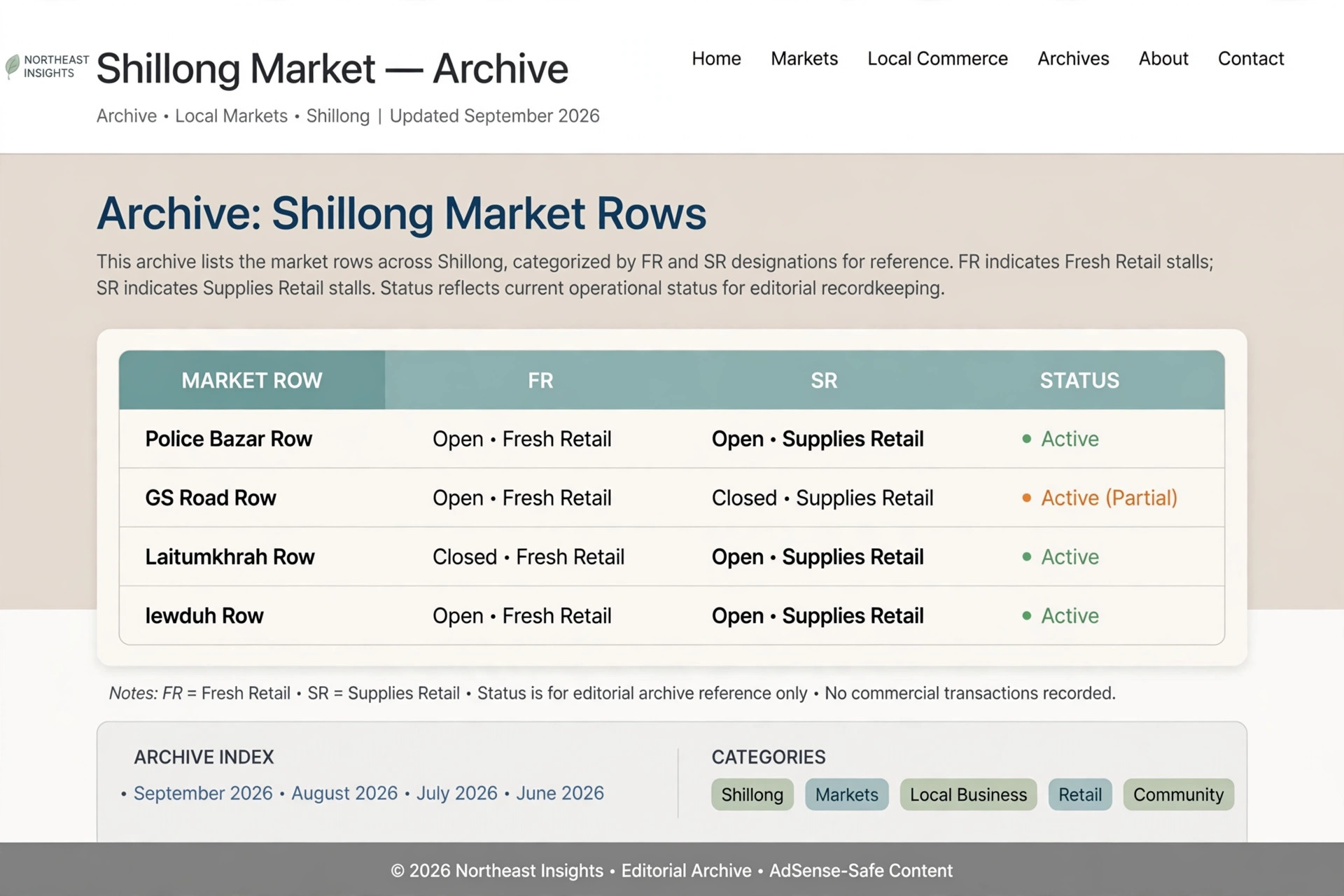
Once you have the date, open the Shillong section. Identify which session you need. If you are checking a ticket, the ticket usually indicates the session, or you know from when you played. Match the session: morning, afternoon, or evening. Then match the round: FR or SR. Read the number next to that label. That is the complete lookup, and it takes less than a minute when your archive is properly organized.
If you do not keep a personal diary yet, online result archives serve the same purpose. The complete teer result list on this site is organized by date and market so you can find any past day’s figures, and the dedicated Shillong teer result page carries the market’s latest and previous results in one place. The key is to use one consistent source for lookups rather than collecting numbers from scattered chat messages. A single trusted listing plus your own diary is the combination seasoned followers rely on.
A practical tip from experienced followers: when you look up the shillong teer result yesterday, verify the day of the week as well. It is surprisingly easy to look at the wrong date when yesterday was a Sunday or a holiday with no sessions. If the date you are viewing shows no results, check whether the market was actually running that day before assuming the listing is incomplete.
Juwai Teer Result Yesterday and Khanapara Teer Result Yesterday
Juwai and Khanapara each have their own loyal following, and looking up the juwai teer result yesterday or the khanapara teer result yesterday follows exactly the same method: date first, then market section, then session, then round. What differs is only where you look.
Juwai teer runs its own schedule of morning, afternoon and evening sessions with first and second rounds, independent of Shillong. A number declared in Juwai has nothing to do with the number declared in Shillong on the same day. This is a point beginners sometimes miss, assuming the markets move together. They do not. Each market’s archery is a separate event with its own result. Your archive must keep them in separate sections precisely because the numbers are unrelated.
Khanapara teer is closely associated with the Guwahati area of Assam and is followed by a large audience across the region. Like the other markets, it declares FR and SR results across its sessions. The khanapara teer result yesterday is found the same way: locate yesterday’s date, open the Khanapara section, select the session and round.

For market specific lookups online, this site’s dedicated pages keep each market’s results separate: the Juwai teer result page and the Khanapara teer result page. Cross checking between your diary and the market page is a good habit. If the two ever disagree, the discrepancy itself is useful information: it tells you to verify against the official declaration before trusting either figure. Experienced followers would rather spend five minutes confirming than a whole day acting on a wrong number.
Understanding FR and SR in Yesterday’s Records
Every session in every market has two rounds, and understanding what FR and SR mean is essential for reading any past result correctly. FR stands for the first round. SR stands for the second round. In each round, a set number of archers shoot a set number of arrows at a target, and the result is derived from the count of arrows that hit the target. The final two digits of that count form the declared number for the round. For more on the archery behind the game, the history of archery gives useful background on the sport itself.
When you read a yesterday teer record, you will always see FR and SR as a pair for each session. They are two separate results from two separate rounds of shooting. The FR number does not determine the SR number. They are independent events that happen one after the other. This matters because a common beginner error is to read the FR figure and assume the SR figure is somehow related. It is not.

In your diary, always keep the pair together but clearly labelled. Write “FR” and “SR” in full the first few times until the habit is automatic. Never write a number without its round label. A bare number in a diary is useless a month later, because you will not remember whether it was a first round or second round figure. The seasoned follower’s rule is simple: a number without a label is a number lost.
Teer is a legal lottery in the state of Meghalaya, regulated under the state’s lottery framework, and it is for adults aged 18 and above only. The Meghalaya government portal is the authoritative source for information about the state’s administration and legal framework. Whatever your interest in past results, keep it within responsible participation and never involve minors.
What Your Records Can and Cannot Tell You
An honest guide about yesterday’s results must say clearly what record keeping is for and what it is not for. Your diary and archive are excellent tools for several real purposes. They confirm whether your ticket won. They settle disagreements about what was declared. They let you verify the accuracy of any source you use. They give you a complete personal history of the game as you experienced it. These are genuine, practical uses, and they are the reason experienced followers keep records in the first place.
What records cannot do is predict future results. Each round of teer is an independent event. The arrows shot today have no memory of the arrows shot yesterday. No pattern in past results changes the odds of the next round. This is not a matter of opinion; it is how the game works. The seasoned followers who keep the tidiest diaries are usually the first to say this. They keep records for accuracy and reference, not for forecasting.
This distinction matters because a lot of misleading content around teer suggests otherwise. You will encounter claims that studying yesterday’s numbers reveals what comes next, sometimes packaged with so called common numbers or target numbers. This guide contains none of that, deliberately. Past results are a record of history. Treating them as a forecast is a misunderstanding of the game, and acting on that misunderstanding costs real money. Keep your archive as a librarian keeps a catalogue: complete, accurate, and honest about what it is.
Common Mistakes Beginners Make With Yesterday Teer Data
Watching how beginners handle past results is instructive, because the same errors appear again and again. The first is relying on memory. Someone glances at yesterday’s result, does not write it down, and a week later confidently misremembers it. The diary exists precisely because memory is unreliable. Write it down the same day, every day.
The second mistake is mixing up markets. A follower remembers a number from yesterday but cannot say whether it was Shillong, Juwai or Khanapara. In the diary, the market label is as important as the number itself. Get into the habit of saying the full reference aloud when you record it: “Shillong, afternoon, second round,” and then the number. The spoken habit reinforces the written one.
The third mistake is confusing sessions. Morning, afternoon and evening each have their own FR and SR. Recording an afternoon number in the morning slot corrupts the record silently, because nothing looks wrong until you try to use it later. Slow down at the moment of recording. Match the session to the time the result was actually declared.
The fourth mistake is trusting unverified forwards. A number arrives in a chat group labelled as yesterday’s result, and it gets copied into the diary without checking. Then the diary, which should be the trustworthy source, contains someone else’s error. Always verify a forwarded number against your primary source before writing it down. Your diary is only as reliable as its weakest entry.
The fifth mistake is giving up on the system after a few days. The diary feels unnecessary when results are easy to remember. Then a busy week passes, entries are missed, and the archive has holes exactly when you need it. The experienced follower treats the daily update as non negotiable, like locking the door at night. It takes minutes. The holes it prevents take far longer to repair.
Building the Habit Step by Step
If you have never kept a result diary, start today and keep it simple. Follow these steps in order, and do not add complexity until the basic habit is solid.
Step 1 – Choose your tool. Pick either a dedicated notebook or a single spreadsheet file. Do not use both at the start; one system you actually maintain beats two systems you abandon.
Step 2 – Set up the layout. Create the date first, then the three market sections, then the sessions and rounds under each. Use the structure shown earlier in this guide. Leave space for days with no sessions.
Step 3 – Record yesterday first. Before you build forward, fill in the teer result yesterday for the markets you follow. This gives your diary an immediate anchor and tests your layout against real data.
Step 4 – Set a daily time. Choose a fixed moment each day to update the diary, ideally after the evening session results are declared. Attach it to an existing habit so you do not forget.
Step 5 – Review weekly. Once a week, flip through the past seven days. Check for gaps, mislabelled entries, and sessions marked as not run. Fixing small errors weekly keeps them from becoming permanent confusion.
Step 6 – Back it up. If your diary is digital, keep a copy somewhere safe. If it is paper, photograph each completed page monthly. An archive you can lose is not an archive.
After a month of this routine, you will have something most followers never build: a complete, trustworthy personal record. You will look up any past day in seconds. You will never again argue about what yesterday’s number was. And you will understand the game at a level that casual followers never reach, because you will have watched it unfold day by day in your own hand.
Frequently Asked Questions About Teer Result Yesterday
Where can I find the teer result yesterday for all markets?
The most reliable approach is a personal diary backed by a consistent online archive. For a consolidated view, the teer result list page on this site organizes past results by date and market, so you can locate yesterday’s figures for Shillong, Juwai and Khanapara in one place. Keep your own written record alongside it so you always have a copy you control.
What does it mean if yesterday shows no result for a market?
It usually means the market did not run a session that day. Teer markets are generally closed on Sundays, and there are occasional public holidays or pauses. Before assuming a listing is incomplete, check the day of the week and whether a holiday applied. In your own diary, mark such days clearly with a dash or the word “off” so future you knows the gap was real and not a missed entry.
How do FR and SR appear in yesterday’s results?
Each session declares two separate numbers: FR for the first round of shooting and SR for the second round. A complete yesterday teer result entry therefore shows a pair of numbers for every session of every market you follow. Always read and record both, clearly labelled, because a number without its round label cannot be interpreted correctly later.
Is the shillong teer result yesterday the same as the Juwai or Khanapara result?
No. Each market holds its own separate archery events and declares its own independent results. The shillong teer result yesterday, the juwai teer result yesterday and the khanapara teer result yesterday are three different sets of numbers. Never assume they match, and always record each market in its own section of your diary.
Can studying yesterday teer results help me predict today’s numbers?
No. Each round of teer is an independent event, and past results do not influence future ones. Keeping records is valuable for verifying tickets, settling disputes and maintaining an accurate personal history of the game. It is not a forecasting method. Be cautious of anyone who claims that yesterday’s numbers reveal what comes next.
How far back should I keep my past result records?
That depends on your needs, but most experienced followers keep at least a few months, and many keep a full year or more. A longer archive makes it easier to verify old tickets and answer questions about any past date. Digital spreadsheets make long archives effortless, since searching a year of rows takes seconds. Whatever length you choose, keep the format identical from the first day to the last.
Conclusion
The teer result yesterday is the cornerstone of the experienced follower’s system. It is the number that settles tickets, ends arguments and anchors every personal archive. By understanding the daily rhythm of morning, afternoon and evening sessions, by keeping a consistent diary with clear labels for market, session and round, and by structuring your archive so any date can be found in seconds, you move from casual follower to methodical record keeper. Start with yesterday, keep the habit daily, and let the archive grow. Teer is a legal lottery in Meghalaya for adults aged 18 and above only, so participate responsibly and keep the game what it should be: an orderly pastime, recorded with care.