

If you have ever stared at a two digit number on a teer website and wondered where it actually came from, this guide is for you. The jowai ladrymbai teer result is not picked by a computer, drawn from a drum, or decided by anyone’s guess. It is produced on an archery ground in front of witnesses, through a counting process that has stayed the same for decades. This article walks through the full mechanics: how teer numbers are derived, what FR and SR rounds really are, how a Jowai Ladrymbai session runs from the first ticket sale to the final announcement, and how to read the published result the way an experienced follower does. Everything here is about understanding the game, not about predicting numbers. No common numbers, no hit numbers, and no betting tips appear anywhere in this guide.
What the Jowai Ladrymbai Teer Result Actually Is
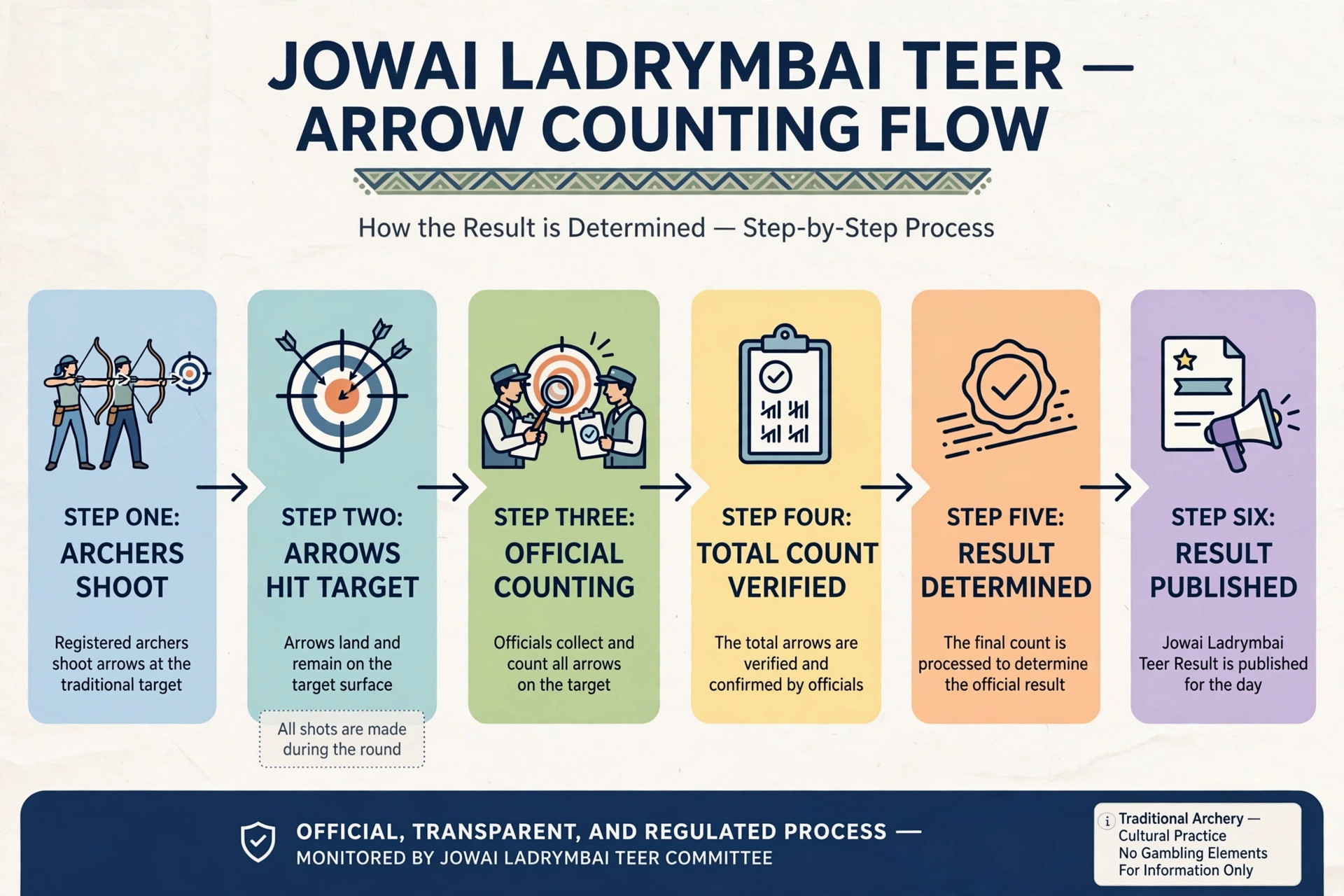
Teer is an archery based lottery that is legal in the state of Meghalaya. Organised teer associations run archery sessions at licensed grounds, and the public can buy tickets on two digit numbers from 00 to 99 before the archery begins. After the archers shoot, officials count how many arrows hit the target, and the last two digits of that count become the declared result. That single mechanism sits behind every teer result published in Meghalaya, including the Jowai Ladrymbai teer result.
The name tells you the venue. Jowai is the headquarters town of West Jaintia Hills district in Meghalaya, and Ladrymbai is a town in East Jaintia Hills district. The Jowai Ladrymbai teer session is one of the organised teer events in the Jaintia Hills region, run by its own association with its own archers, its own ground, and its own counters. When you look up the jowai ladrymbai teer result, you are looking at the outcome of that specific venue’s archery session, not Shillong’s and not any other town’s. Keeping venues separate matters, because each venue runs independently and declares its own numbers.
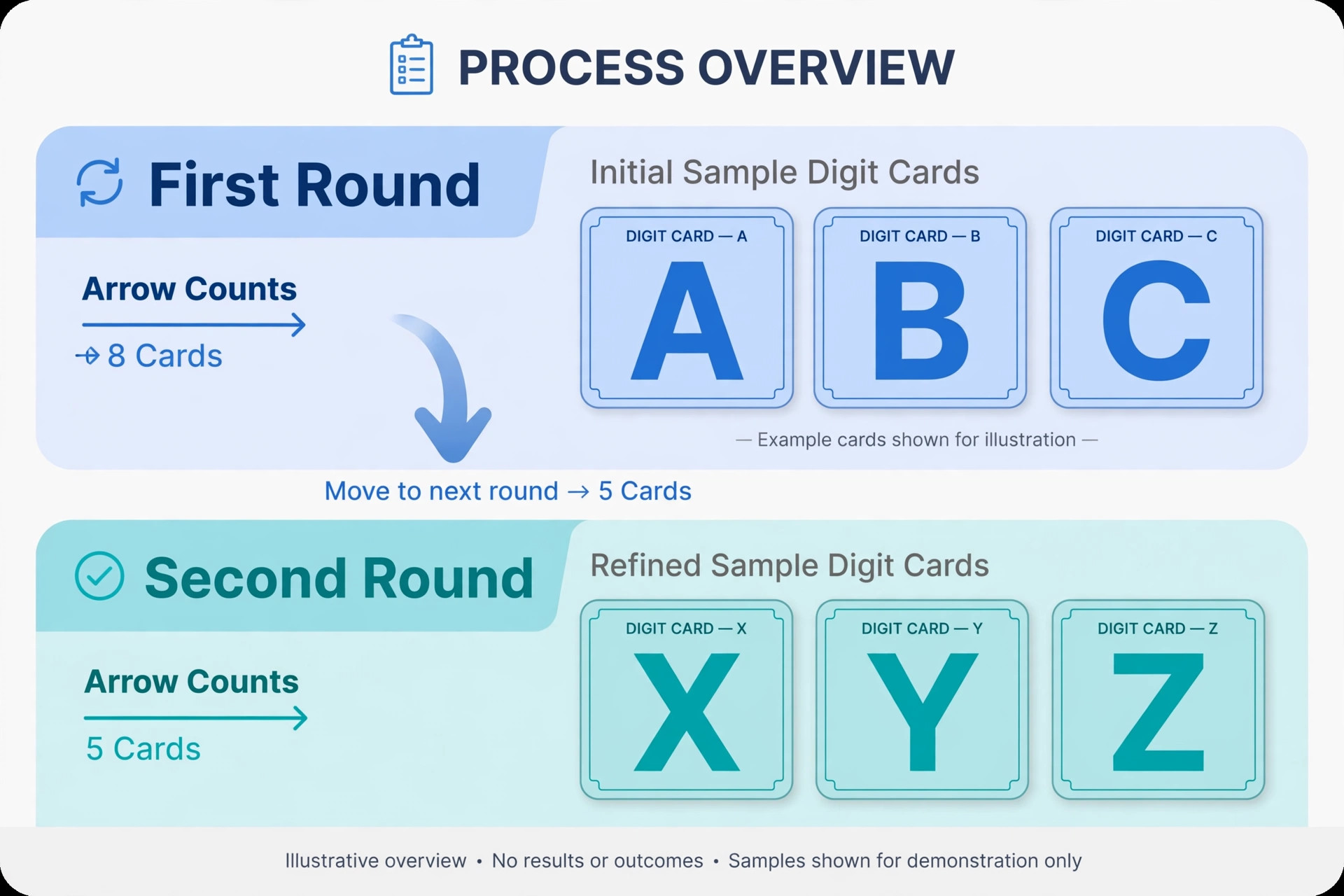
A session produces two results, not one. Every teer session is played in two rounds, called FR for first round and SR for second round. Each round is a complete shooting event with its own count and its own derived number. So a full Jowai Ladrymbai teer result for the day is actually a pair: the FR number and the SR number, each derived from its own round of archery.
How Teer Numbers Are Actually Derived
This is the part most result websites never explain. The number is not chosen. It is discovered, through counting. Understanding the derivation is the difference between blindly copying numbers and genuinely following the game.
The Archers and the Target
A teer session begins with a group of archers standing at a fixed distance from a target. The number of participating archers can vary by venue and by day, and the archers shoot a set number of arrows within the round. The target is a standard archery target, and the only thing that matters for the result is whether an arrow hits it. A near miss that lands in the ground beside the target does not count. An arrow that strikes the target face counts, regardless of which ring it lands in.
The shooting happens in the open, in front of association officials, club representatives, and often a crowd of ticket holders who have come to watch. This public setting is part of what makes the game trusted locally. The arrows are real, the target is visible, and the counting that follows is done where people can see it. For the background of the sport and the region, you can read more about teer and about Jowai itself.
Counting the Arrows That Hit the Target
Once the shooting for a round finishes, officials collect and count every arrow that hit the target. This is a physical count, done by hand, and it is checked before it is accepted. The total might be a few hundred arrows in a large session or a smaller number in a smaller one. The exact total depends on how many archers shot and how many arrows each one loosed, minus the arrows that missed.
Here is a simplified illustration of the counting, using placeholder values that are examples only and not real results. Suppose the officials count the arrows on the target and arrive at a total of 847 hitting arrows. That total of 847 is the raw count for the round. Nothing about 847 is announced as the result, because teer results are always two digit numbers. The raw count is only the starting point.
Why Only the Last Two Digits Count
The declared result is the last two digits of the total arrow count. In the illustration above, a count of 847 hitting arrows would produce the result 47. If the count had been 1,203, the result would be 03. If the count had been exactly 900, the result would be 00. This rule is uniform across teer venues in Meghalaya, so the same derivation logic applies whether you are following the jowai teer result, the ladrymbai teer result, or any other session.
The two digit format is also why tickets are sold on numbers from 00 to 99. A ticket holder picks a two digit number, and the ticket wins if it matches the last two digits of the official arrow count for that round. There is no third digit, no bonus ball, and no separate draw. The entire game reduces to one question: what will the last two digits of the arrow count be?
This is worth pausing on, because it clears up the most common beginner confusion. People new to the game sometimes assume the result is a score, like the points an archer earns for accuracy. It is not. Accuracy does not matter. The number of arrows that physically strike the target is the only input, and the last two digits of that number are the only output.
FR vs SR Rounds Explained in Detail
Every Jowai Ladrymbai teer session has two rounds, and each round gets its own result. If you want to read a result card correctly, you need to know exactly how the two rounds differ and why both exist.
The First Round (FR)
FR stands for first round. It is the opening shooting event of the session. Archers take their positions, shoot their allotted arrows, and officials count the arrows that hit the target. The last two digits of that count become the FR result. Ticket sales for the first round close before the shooting starts, and only tickets bought for FR are eligible against the FR number.
The first round sets the tone of the session. Because it happens earlier in the day, it is the result that most followers check first. On result websites, the FR number is always listed separately from the SR number, and the two should never be mixed up. A ticket bought for the first round cannot win on the second round’s number, and the reverse is equally true.
The Second Round (SR)
SR stands for second round. After the first round is complete and its result is declared, the archers shoot again in a second, separate round. The arrows are counted afresh, and the last two digits of this new count become the SR result. It is a fully independent event: the arrows from the first round are not carried over, and the count starts from zero.
The second round gives ticket holders a second chance within the same session. Many followers buy tickets for both rounds, treating FR and SR as two separate games that happen to share a venue and a day. When you see a complete jowai ladrymbai teer result listing, you will always see the pair together, FR first and SR second, because that is the order in which they were decided.
Why Two Rounds Instead of One
The two round structure is traditional to teer across Meghalaya. Practically, it doubles the playing opportunities in a single session without requiring a second full event. Culturally, it stretches the excitement of the session across the afternoon, with the first round’s declaration building anticipation for the second. For the associations, it also means two separate ticket pools and two separate payouts, which is part of how the organised game sustains itself. You can follow both rounds as they are declared on the Pro Teer Result homepage, where the FR and SR cards update through the session.
From a follower’s point of view, the important takeaway is independence. The FR number tells you nothing about what the SR number will be, because each comes from a fresh round of shooting and a fresh count. Treating the two rounds as linked, or assuming one predicts the other, is a misunderstanding of the mechanics.
A Jowai Ladrymbai Session from Start to Finish
Knowing the rules in the abstract is useful, but the game is clearer when you walk through a session in order. Here is how a typical Jowai Ladrymbai teer session unfolds, stage by stage.
Step 1 – Tickets Go on Sale at the Counters
Well before any arrow is shot, licensed ticket counters open for the session. Buyers choose a two digit number from 00 to 99 and buy a ticket for FR, for SR, or for both rounds. Each ticket is round specific, and the counter records the sale. Sales for the first round close at a cutoff time before the archers begin, and SR sales close before the second round starts. Anyone who arrives after the cutoff cannot buy into that round.
Step 2 – Archers Take Their Positions
As the session time approaches, the participating archers gather at the ground and take their positions at the shooting line. Association officials and club representatives are present to oversee the round. The target is set at the regulation distance, and the ground is prepared so that the shooting and the later counting can proceed without interruption.
Step 3 – The Shooting Begins
On the officials’ signal, the archers shoot their arrows at the target. The round continues until every archer has shot the allotted number of arrows. Spectators watch the arrows fly, and experienced followers sometimes try to judge roughly how many arrows are landing, though nobody can count hundreds of arrows accurately by eye in real time. The shooting itself is usually over in a matter of minutes.
Step 4 – Officials Count the Hitting Arrows
This is the decisive stage. Officials approach the target and count every arrow that struck it, with representatives watching the count. The total is checked and agreed before it is accepted as the official count for the round. In our earlier illustration, a count of 847 hitting arrows would be the kind of figure produced here. The raw count is the fact; everything after it is arithmetic.
Step 5 – The Result Is Derived and Declared
The last two digits of the official count become the round’s result, and the association declares it. The declaration is announced at the ground and then relayed to counters, agents, and result publishers. The FR result is declared after the first round, and the whole process then repeats for the second round: shooting, counting, derivation, declaration. Once both rounds are declared, the session is complete.
Step 6 – Verification and Payout
After declaration, winning tickets are verified against the official numbers, and payouts are made through the counters and agents according to the association’s published prize structure. Result websites then publish the FR and SR numbers for the day, which is the jowai ladrymbai teer result that online followers see. If you want to see how published numbers are organised across days, the past Jowai Ladrymbai results on Pro Teer Result keep prior sessions in date order.

Reading the Jowai Ladrymbai Teer Result Like a Pro
Published result cards all look similar, but experienced followers read them differently from beginners. Here is how to read one properly.
Anatomy of a Result Card
A proper Jowai Ladrymbai result card contains a few standard fields. The date of the session comes first, because teer results are strictly daily and yesterday’s numbers have no bearing on today. Then the FR number and the SR number appear as separate entries, each clearly labeled. Some cards also note the venue name to distinguish the session from Shillong or other towns, and some show the status of each round, for example whether it has been declared yet.
When a round has not been declared yet, a good result card shows a placeholder such as “-” rather than a number. That placeholder is important: it means the round is still pending, not that the result is zero. Never mistake a pending placeholder for a declared result.
Mistakes Beginners Make
The most frequent beginner mistake is mixing up FR and SR, either by reading the wrong column or by assuming a ticket for one round covers both. The second is reading another venue’s card, for example checking a Shillong teer result page while holding a Jowai Ladrymbai ticket. The third is treating a predicted or guessed number seen on social media as an official result. Official results come only from the association’s declaration after the count. Anything published before the count is complete is not a result, no matter how confidently it is presented.
A fourth mistake is subtler: assuming that because the derivation is mechanical, the numbers must follow a pattern. The last two digits of an arrow count depend on hundreds of individual shots by dozens of archers, which is exactly why the game is treated as a lottery. Understanding the mechanics should increase your respect for the randomness, not feed the illusion that the next number can be worked out.
Jowai Ladrymbai Teer Result Today and the Live Card
Followers searching for the jowai ladrymbai teer result today are usually looking for the live card: the current day’s session with FR and SR fields that fill in as each round is declared. Results are typically declared in the afternoon, with the first round declared before the second, and the live card is the fastest way to see each number the moment it becomes official.
A few practical habits make the live card more useful. Check the date on the card before reading the numbers, so you know you are looking at today’s session and not a cached older one. Many readers land here after searching for the jowai teer result today, and if your ticket came from the Jaintia Hills counters, this Jowai Ladrymbai card is the one to watch. Read FR and SR as a pair but remember they are independent. If a field still shows a placeholder, the round is pending and the number has not been decided yet. And always cross check a surprising number against a second source before acting on it, since transcription errors on unofficial pages do happen. The Pro Teer Result homepage carries the current day’s cards for the covered venues.

Frequently Asked Questions
What does the Jowai Ladrymbai teer result represent?
It represents the declared outcome of the Jowai Ladrymbai teer archery session for a given day: two numbers, one for the first round (FR) and one for the second round (SR). Each number is the last two digits of the official count of arrows that hit the target in that round.
How is the winning number actually decided?
It is decided by counting. After the archers finish a round, officials count every arrow that struck the target. The last two digits of that total become the result. For example only, and not a real result, a count of 847 hitting arrows would give the number 47. No draw, no machine, and no human choice is involved.
What is the difference between FR and SR?
FR is the first round and SR is the second round of the same session. Each round is a separate shooting event with its own arrow count and its own derived number. Tickets are round specific, so an FR ticket can only win on the FR number and an SR ticket only on the SR number.
When is the Jowai Ladrymbai teer result declared?
Results are typically declared in the afternoon, with the first round declared before the second round. Exact timings can vary by day and by association schedule, so readers should check the live result card for the current status rather than relying on a fixed clock time.
Can the result be predicted from previous days?
No. Each round’s number comes from a fresh count of arrows shot that day, and past results do not influence future counts. This guide explains the mechanics so readers understand the game; it contains no predictions, no common numbers, and no betting advice of any kind.
Is Jowai Ladrymbai teer legal, and who can play?
Teer is a legal, state regulated lottery in Meghalaya, and it is strictly for adults aged 18 and above. Tickets should be bought only from licensed counters, and everyone should play responsibly and only with money they can afford to spend.
Conclusion
The jowai ladrymbai teer result looks like a simple pair of two digit numbers, but behind it sits a complete physical process: archers on a ground, arrows counted by hand, and a two digit derivation rule applied in the open. Once you understand that the number is the last two digits of a real arrow count, that FR and SR are fully independent rounds, and that a session moves through fixed stages from ticket sale to declaration, you can follow the game with confidence instead of confusion. Keep this guide bookmarked as a reference, check the live card for today’s declared numbers, and remember the standing rule of responsible play: teer is a legal lottery in Meghalaya for adults aged 18 and above, so play responsibly and never chase losses.