
A juwai teer previous result is more than yesterday’s numbers. It is a public record, and public records do serious work. They keep games honest, settle disagreements, and let anyone verify anything at any time. This guide looks at the Juwai teer archive through the lens of transparency: what makes a result record trustworthy, how our archive is organized and verified, and why a permanent dated history protects every follower of the game.
Juwai teer is a legal archery based lottery in Meghalaya. Each working day, archers shoot at targets in two rounds, officials count the hits, and the last two digits of each count are declared as the FR and SR winning numbers. The game runs in two sessions on most working days, morning and day, each with its own archers, counters, and declared numbers. Pro Teer Result publishes the live numbers on our homepage as the morning, afternoon, and evening declarations happen, then files each completed day into the dated archive where every juwai teer previous result remains permanently visible.

What Makes a Record a Public Record
Not every list of numbers qualifies as a public record. A public record has four qualities, and the teer archive is built to meet all of them.
Openness. Anyone can read it without an account, a payment, or permission. A record that only some people can see is not public.
Permanence. Entries do not expire, get deleted, or quietly change. What was declared on a date stays attached to that date.
Precision. Each entry carries its full date, its market and session label, and its numbers in fixed order. Vague records cannot be verified, so precision is non negotiable.
Neutrality. The record shows what was declared and nothing else. No commentary, no predictions, no selective editing. Neutrality is what lets both sides of any disagreement trust the same page.
When you open a juwai teer previous result in our archive, all four qualities are working for you at once. That is what turns a simple list into an institution the community can rely on. Players quote the archive in shop disputes, counters check it against their own notes, and long time followers treat it as the final word whenever two claimed numbers collide.
Transparency: How Openness Keeps Teer Honest
Transparency is the practical benefit of a public record. Here is how it protects the game in concrete terms.
Declarations happen in the open
Teer results are declared at the ground in front of witnesses. The counting is observed, the numbers are announced publicly, and from that moment they belong to everyone. There is no private step where a number could be altered before the public sees it. The archive simply extends that openness across time, so that a declaration from weeks ago is as visible as one from this afternoon.
Anyone can audit the history
Because every juwai teer previous result stays published with its date, anyone can review the full history and check it for consistency. Dates run in order, sessions stay labelled, and formats stay fixed. This auditability is quiet but powerful. It means errors surface quickly and manipulation has nowhere to hide.
Rumours die against the record
False numbers spread through messages and chats every day. Against a public record, they have a short life. Anyone can open the dated entry and compare. The rumour either matches the record, in which case it was true, or it does not, in which case it dies on the spot. Without the archive, rumours would linger for days. With it, they last minutes.
Trust compounds over time
A single accurate page proves little. A year of accurate pages proves everything. The longer the archive runs without a disputed entry, the more trust it carries, and that trust feeds back into the game itself. Counters settle disputes faster, players argue less, and new followers learn immediately that teer has a record they can rely on. Transparency is not a one time act. It is a daily habit, and the archive is where that habit is stored.
How the Juwai Teer Previous Result Archive Is Organized
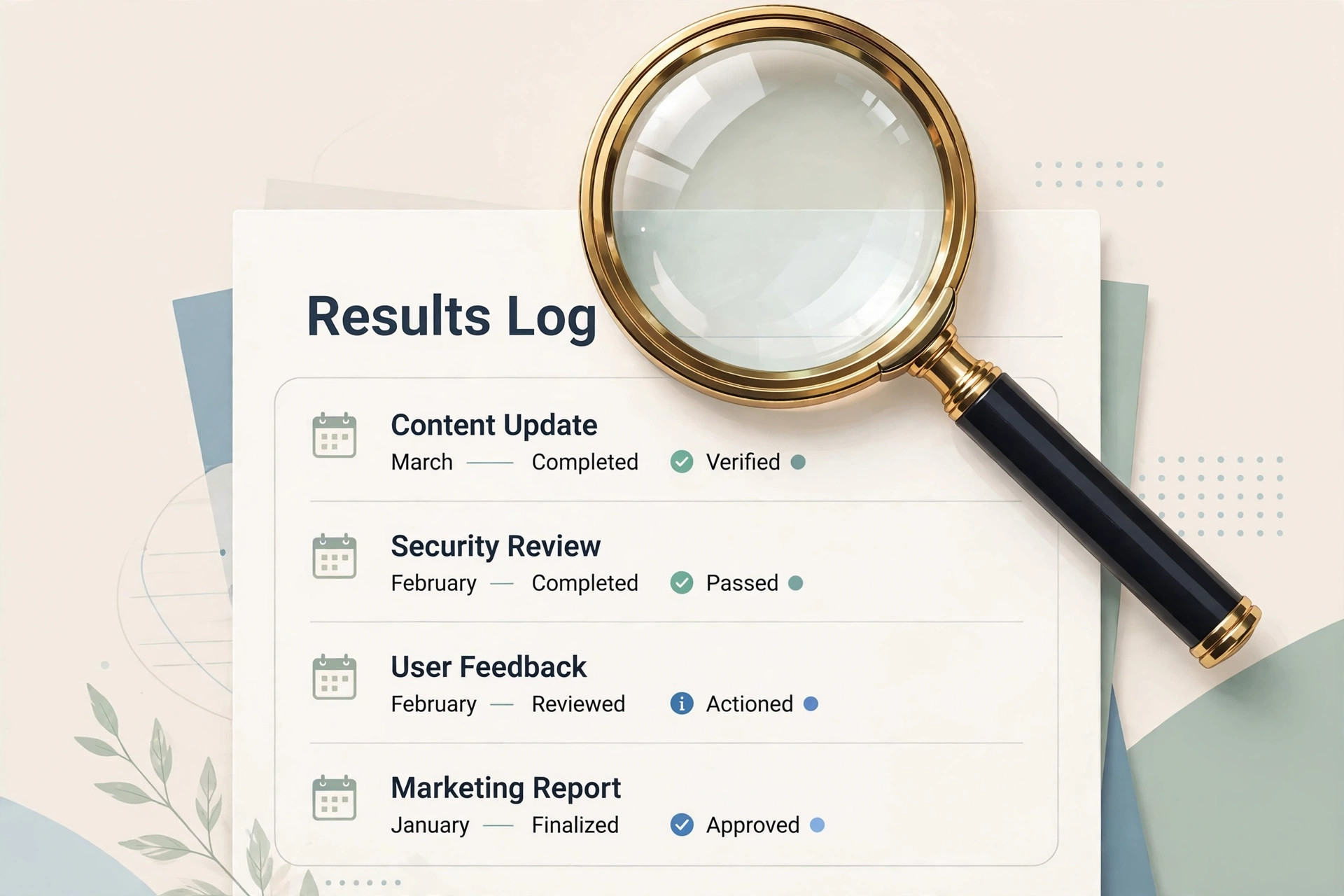
A public record is only useful if readers can find what they need in seconds. Our archive is organized around three simple rules that keep every entry easy to locate and easy to read.
Newest entries come first
The archive lists the most recent juwai teer previous result at the top, with older dates following in reverse chronological order. This matches how most readers use the record: checking yesterday, last week, or a specific recent date. You never have to scroll through years of history to find last Tuesday.
Each entry carries a full date and label
Every entry shows the complete calendar date, the market name, and the session label. For Juwai that means a clear distinction between the morning session and the day session, each with its own FR and SR. The full date matters more than it looks. Short or partial dates create ambiguity when a year boundary passes or when two Mondays in different months get confused. Full dates leave no room for that.
Numbers always appear in fixed order
Within each entry, FR comes before SR, every time, in every entry. This fixed order is a small detail with a large payoff. Once readers learn the pattern, they can scan dozens of entries without ever mixing up which number belongs to which round. The placeholder dash “-” keeps its position too, so an entry with one declared number and one pending number still reads cleanly and never invites misreading.
History is preserved, not trimmed
We keep up to 30 days of dated entries visible in the rolling archive, and older records remain reachable beyond that. Trimming history might make a page look tidier, but a public record is not judged by tidiness. It is judged by completeness. A reader looking for a number from weeks ago deserves to find it exactly where it has always been.
The Juwai Teer Previous Result Verification Process
Trust in the archive does not happen by accident. It is built by a verification routine that runs every working day before any number reaches the page.
Collection from multiple sources
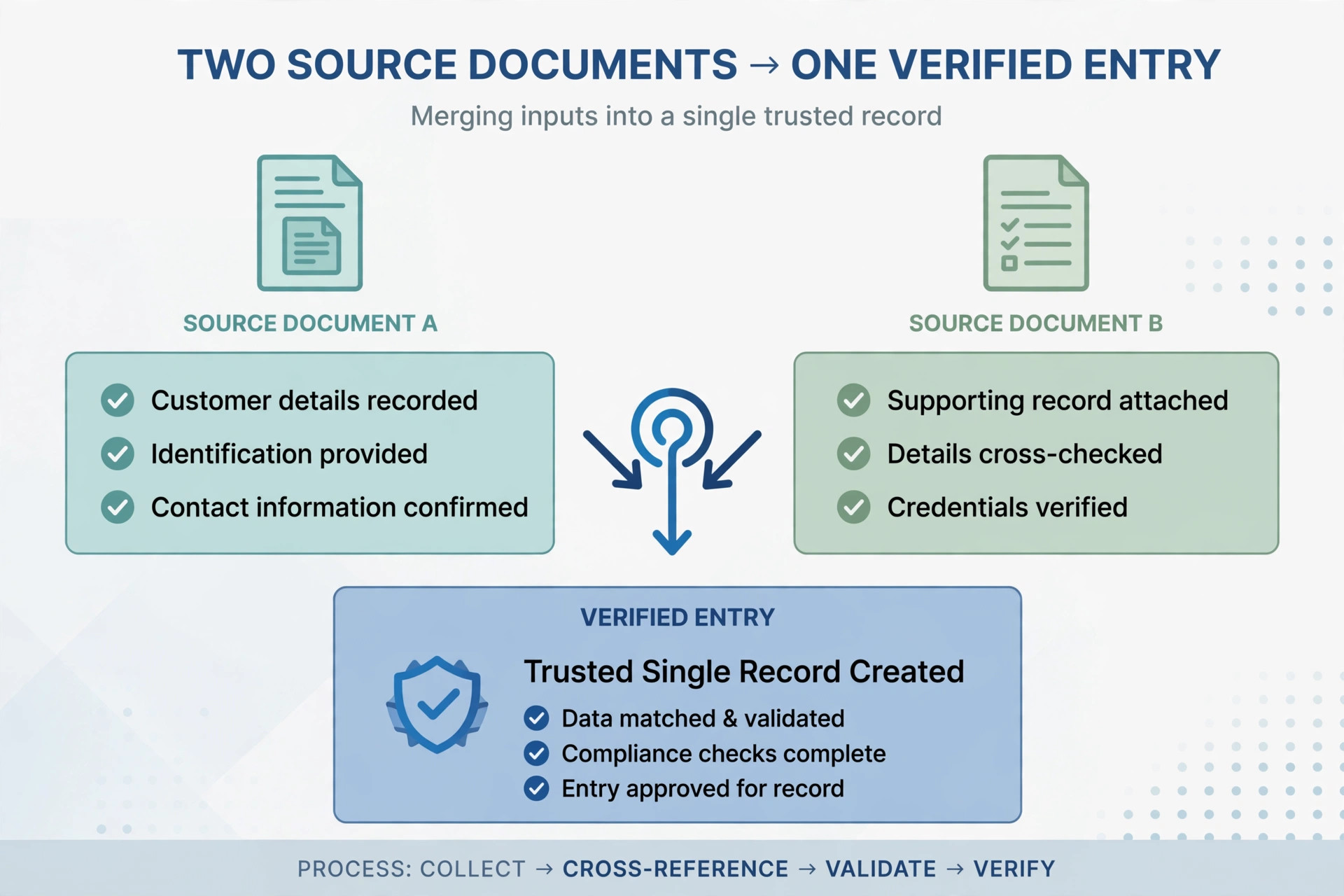
When a round is declared, our team collects the announced number from at least two independent result sources. Independent matters. Two sources that copy each other are really one source. We look for sources with their own collection from the ground.
Agreement before publishing
A number is published only when the independent sources agree. If they disagree, the entry waits. No number goes up on a single unconfirmed report, because a public record cannot afford to guess. This waiting is sometimes visible to readers as a dash “-” that persists a little longer than usual. That patience is the verification process doing its job.
Same day publication
In normal conditions, verified numbers are published the same day they are declared. The morning session numbers appear after the morning declaration, the day session FR after the afternoon declaration, and the SR after the evening one. By night, the day’s juwai teer previous result is complete. Speed matters to readers, but never at the cost of the agreement rule. A fast wrong number is worse than a slightly slower right one.
Permanent preservation
Once published and complete, the entry joins the dated archive in newest first order and stays there permanently. Dates, labels, and FR before SR ordering are preserved exactly. Past entries are never rewritten to suit the present, which is the final guarantee of the record’s integrity.
You can read more about our standards on our about us page.
Integrity: Why Past Entries Never Change
Integrity means the record says the same thing today about last month as it said last month. This sounds obvious, but it is the quality most often missing from casual result pages, where old entries get edited, deleted, or silently “corrected” without note.
The no rewrite rule
Our archive follows a strict no rewrite rule. A completed juwai teer previous result entry is final. If a genuine publishing error were ever proven, it would be corrected openly and transparently, not slipped in quietly. In practice, the verification process catches errors before publishing, so corrections are extremely rare.
Why this matters to you
When you quote an old number in a discussion, you are borrowing the archive’s credibility. That credibility exists only because readers know the entries do not change. Every time you verify a forwarded screenshot against the dated list and find the list steady, you are experiencing integrity in action.
The format as integrity tool
The fixed format, date, label, FR, SR, dash where needed, is itself an integrity measure. When every entry looks the same, any tampering would stand out. Consistency is not just readability. It is a seal on the record.
Consistency across sessions
Integrity also means the morning and day sessions are held to the same standard. Neither session gets looser verification or sloppier labelling. Readers should be able to trust a morning entry exactly as much as a day entry, and our process treats both identically from collection through publication.
What Blank Days and Dashes Really Mean
Few things confuse new readers more than the empty spaces in the archive. Understanding them prevents the most common misreadings.
Sundays and holidays have no entries
Teer is played on working days. On Sundays and public holidays the game is not held, so the archive carries no entry for those dates. A missing date is not a missing number. It is an accurate record that nothing was declared that day. If you count entries to work out how many games happened in a month, remember to skip the days with no play.
A dash on a live day means not yet declared
During a live day, an entry may show one number and a dash where the second round is still to come. This is the archive being honest in real time: the first declaration happened, the second has not. The dash fills in after the evening declaration and the entry is then complete.
A dash is never zero and never a result
This deserves repetition because it trips up beginners. The dash “-” is a placeholder meaning not declared or not held. It is not the number zero, it is not a hint, and it is not a result you can claim anything about. On settled past dates both numbers are filled, so a dash only ever appears on days still in progress.
Partial entries resolve by night
On a normal working day, any temporary dash resolves by night once the final declaration of the day is verified and published. If a dash persists into the next day, something unusual happened, typically a genuine delay or an exceptionally rare day when a session was not held. The archive shows the truth either way, without rewriting the earlier part of the entry.
How to Use the Public Record Well
A public record is a tool. Here is how to get the most from it.
Verify before you trust
Any number you hear, whether from a friend, a chat group, or a screenshot, deserves thirty seconds of verification. Open the teer result list page, find the Juwai block, match the full date, confirm the session label, and read FR then SR. If the heard number matches the juwai teer previous result entry, it is genuine. If not, the entry wins.
Keep sessions separate
Juwai morning and Juwai day are separate games with separate histories. Their records sit under separate labels for a reason. Crossing that boundary in your reading or your notes creates false pairs that never existed. Respect the label every time. This is the single most common source of “the numbers look wrong” complaints, and it is always a reading mistake, never a record mistake.
Read dashes correctly
A dash “-” means not declared yet on a live day, or not held on a date with no game. It is never a result and never zero. On settled past dates both numbers are filled. On Sundays and holidays there is no entry at all, which correctly reflects that no game was played.
Use the archive to settle disputes calmly
Counter disputes, group chat arguments, and “someone told me otherwise” moments all have the same solution: open the dated entry together and read it aloud. When both sides look at the same public record, most disagreements end in seconds. The archive works best not as a weapon in an argument but as a shared reference that both parties already trust.
Teach others the habit
The record protects the whole community only if the community uses it. When someone quotes an unverified number, show them the archive instead of arguing. One demonstration teaches the habit better than ten explanations. For the current day’s live numbers, point them to our juwai teer result page.
What the Record Cannot Do
Honesty requires stating the limits. The public record is a history of what happened. It cannot predict what will happen next, because every teer round is a fresh archery session independent of all previous ones. No study of past numbers changes the next count.
This limit is worth emphasising because it is widely misunderstood. The archive’s transparency sometimes creates a false impression that with enough history, the future becomes readable. It does not. The record tells the truth about the past and stays silent about the future, and that silence is also a form of honesty. We publish no predictions, no common numbers, and no betting tips, because a trustworthy record keeper does not deal in guesses.
Another limit worth knowing: the archive records declared numbers, not the story behind them. It will not tell you why a declaration was delayed, how many archers took part, or what the weather was like. Those details belong to the ground, not the record. The record’s job is narrower and more valuable: what was declared, for which date and session, permanently.
Teer is a legal lottery in Meghalaya for adults aged 18 and above only. Please participate responsibly and within limits you set for yourself.

The Community’s Stake in the Record
The archive belongs to everyone who uses it, and everyone who uses it has a stake in keeping it honest. Followers who verify numbers instead of forwarding rumours strengthen the record’s authority. Counter owners who point customers to the dated list instead of arguing from memory spread good habits. Publishers who maintain verification discipline keep the whole system credible.
This shared stake is why the juwai teer previous result archive keeps improving. Every careful reader makes the record more valuable, not by changing it, but by using it as intended: openly, precisely, and honestly. Trust in teer is not declared. It is accumulated, one verified number at a time.
When new followers arrive, long time readers are the record’s best ambassadors. A short message, “check the dated archive before you believe any number”, saves a newcomer from rumours, scams, and disappointment. That one sentence, repeated across chats and counters, does more for the game’s integrity than any announcement.
For background on the game, the teer overview on Wikipedia is a reliable starting point, and the Government of Meghalaya portal carries official state information.
FAQs About Juwai Teer Previous Result
What makes the juwai teer previous result archive a public record?
It is open to everyone, permanent, precise with full dates and labels, and neutral with only declared numbers. These four qualities, openness, permanence, precision, neutrality, are what qualify it as a public record rather than just a list.
How are numbers verified before they appear in the archive?
Each declared number is collected from at least two independent sources and published only when they agree. If sources disagree, the entry waits until the correct figure is confirmed. This agreement rule runs every working day.
Why do past entries in the archive never change?
Because integrity requires it. A completed juwai teer previous result entry is final, so readers can quote old numbers with confidence. The no rewrite rule is what makes the archive quotable and trustworthy.
How does the public record stop false numbers from spreading?
By giving everyone instant verification. Any claimed number can be checked against the dated entry in seconds. False numbers fail the check immediately, so rumours die fast instead of lingering.
What should I do when a screenshot disagrees with the archive?
Trust the archive. Screenshots lack verifiable dates and labels and are easy to edit. The dated juwai teer previous result entry comes from verified declared numbers, which makes it the authority in any disagreement.
Are Juwai morning and Juwai day records part of the same history?
No. They are separate games with separate archers and separate numbers, so their histories are recorded under separate labels. Treat them as two diaries, never one.
Can the archive help me predict the next winning number?
No. The archive records independent past events, and each new round is a fresh archery session. Past numbers do not influence future ones. Use the record for verification and history, never for prediction.
Why is there no entry for Sunday in the juwai teer previous result archive?
Because no game is played on Sundays and public holidays. The archive only records days when declarations actually happened. A missing date is accurate, not incomplete.
How far back does the archive go?
We keep a rolling window of recent dated entries, up to 30 days, with older records remaining reachable. The exact visible depth can grow over time, but the guarantee is constant: whatever is shown stays permanent and unrewritten.
Why does a live entry show a dash for the second number?
Because the second round has not been declared yet. The dash “-” is a placeholder that fills in after the evening declaration once the number is verified. It is never a result and never zero.
Conclusion
The juwai teer previous result archive earns its keep every day: keeping declarations honest through openness, killing rumours through instant verification, and preserving history through the no rewrite rule. Use it well by verifying before trusting, respecting session labels, reading dashes correctly, and teaching the habit to others. A public record is only as strong as the community that uses it, and every careful check you perform makes teer that little bit more trustworthy for everyone.
Teer is a legal lottery in Meghalaya for adults aged 18 and above. Please play responsibly.