

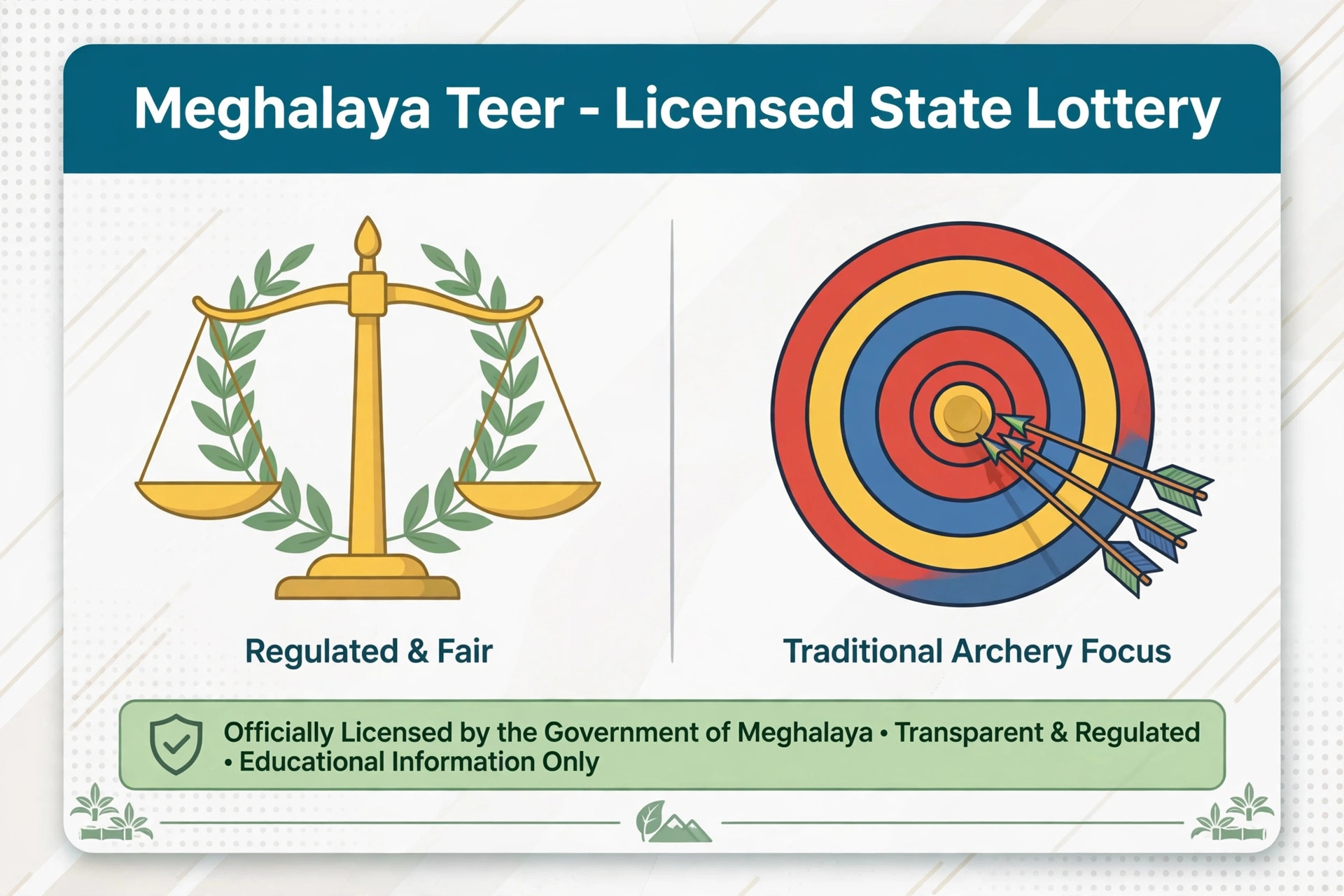
If you are wondering how meghalaya teer compares with the lotteries you hear about in other parts of India, the short answer is that it sits in a category of its own. Most people imagine a lottery as a printed ticket with a number that is drawn from a machine on television. Teer works nothing like that. It is an archery-based game of skill and chance, licensed by the Government of Meghalaya, and its legal foundation is a set of state acts that were written specifically for arrow shooting. This guide explains, in plain language, how the law treats lotteries across India, what makes teer different, and which rules govern the game today. For the day’s published outcomes, you can always check the latest updates on the Pro Teer Result homepage, and a full archive lives in our teer result list.
How Lotteries Work in India: A State Subject
The first thing to understand is that in India, lotteries are not controlled by one national lottery authority. Under the Constitution of India, “betting and gambling” falls within the legislative competence of the states. That means each state government decides for itself whether lotteries are legal inside its borders, and if they are, how they must be organized and sold.
The Lotteries (Regulation) Act, 1998
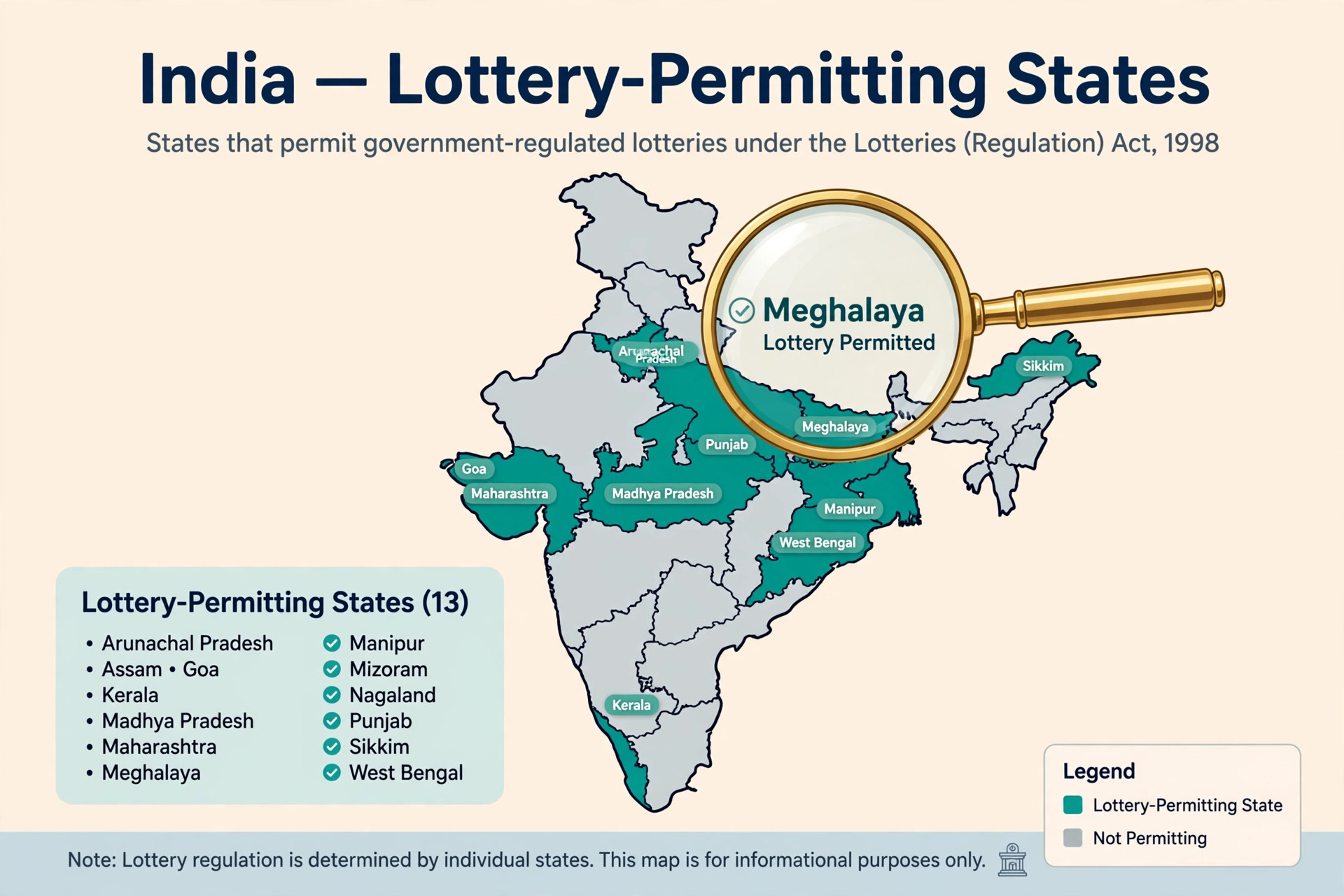
At the centre there is a framework statute: the Lotteries (Regulation) Act, 1998, along with the Lotteries (Regulation) Rules, 2010. This central law does not create a single national lottery. Instead, it lays down the conditions under which a state government may organize, conduct or promote lotteries. It sets boundaries such as the minimum prize amount relative to the sale of tickets, the requirement that draws be fair and properly conducted, and the principle that a state may also choose to prohibit lotteries entirely. A state that wants to run lotteries must follow this framework; a state that does not want them simply does not notify any lottery schemes.
Which States Permit Lotteries
Because permission is state-by-state, the map of legal lotteries in India is uneven. Only some states have chosen to organize paper or online lotteries under the 1998 Act and its rules. Well-known examples include states in the northeast and the south where government lottery departments run weekly and daily draws. Many other states have banned lotteries outright, and in those states buying or selling a lottery ticket of any kind is an offence. This patchwork is the reason you cannot assume that a game which is legal in one state is legal everywhere else. The same principle applies to teer, as we will see below.
Is Teer Legal? The Meghalaya Framework Explained
The question “is teer legal” comes up constantly, and the answer is specific: teer is a legal, licensed game in Meghalaya, conducted under state legislation that was written for it. It is not a product of the central lottery framework in the same way a paper lottery is, because teer predates that framework as a traditional archery pastime of the Khasi community. The state of Meghalaya therefore regulated it through its own betting and amusement laws rather than through the lottery department model used elsewhere.
Section 14A and the 1982 Amendment Act
Teer betting in Meghalaya is licensed under Section 14A of the Meghalaya Amusements and Betting Tax (Amendment) Act, 1982. This provision is the legal backbone of the game. It provides for licensed bookmakers in connection with arrow shooting, and it expressly defines “arrow shooting” so that it includes the game of teer. In other words, the 1982 Amendment Act recognizes teer by name and creates a licensing regime for the people who run it. The official text of the act is published on the state portal, and anyone can read the actual provision in the Meghalaya Amusements and Betting Tax (Amendment) Act, 1982 on meghalaya.gov.in.
The Meghalaya Regulation of the Game of Arrow Shooting and the Sale of Teer Tickets Act, 2018
The legal framework was modernized by the Meghalaya Regulation of the Game of Arrow Shooting and the Sale of Teer Tickets Act, 2018. This is the act most people mean when they talk about the “meghalaya teer act”. The 2018 Act further regulates the game and the sale of teer tickets: it deals with licensing of teer organizers and ticket sellers, the conditions under which tickets may be sold, and the oversight of the game. Together with the 1982 Amendment Act, it forms a complete, teer-specific statute book that no other Indian lottery possesses.
The 1970 Gambling Act and Notified Exemptions
A third piece of the puzzle is the Meghalaya Prevention of Gambling Act, 1970. As its name suggests, this law generally restricts gambling in the state, but it gives the government the power to exempt notified games from its prohibitions. Teer, being a licensed and notified game conducted by authorized organizers, sits on the lawful side of this line. The Law Commission of India, in its Report No. 276 on the legal framework for gambling and sports betting in India, discusses this Meghalaya framework and places teer within the broader national conversation about how games of skill and chance should be regulated.
The Role of the Khasi Hills Archery Sports Association
On the ground, teer is conducted under the aegis of the Khasi Hills Archery Sports Association. This matters because teer is not just a betting product administered by a government department; it is a living sporting tradition. The association oversees the archery side of the game, which is what gives teer its distinctive character and its credibility with players. The combination of a sports body running the archery and the state licensing the betting is unique in Indian lottery law.
Paper Lotteries vs Meghalaya Teer
Now that the legal picture is clear, let us compare the two worlds side by side. A conventional Indian paper lottery and teer lottery meghalaya style play operate on completely different mechanics, histories and legal instruments.
Draw Machines vs Live Archery
A paper lottery works like this: you buy a pre-printed ticket carrying a number, and at a scheduled time the lottery department draws winning numbers, usually with a mechanical draw machine or a computerized random draw, in the presence of officials. The result is generated by the draw alone. Teer works the other way around. Bettors choose a number from 0 to 99, which represents a prediction of the last two digits of the total number of arrows that hit the target during a live archery session. Real archers shoot real arrows at a real target, and the count of arrows striking the target decides the outcome. There is no draw machine anywhere in the process. Two rounds per session are conducted, called the first round (FR) and second round (SR), and each round produces its own two-digit result.
State Lottery Departments vs Licensed Teer Organizers
Paper lotteries are organized by state lottery departments or their authorized agents, operating under schemes notified in line with the Lotteries (Regulation) Act, 1998. Teer is organized by licensed organizers and bookmakers under the Meghalaya acts described above, with the archery conducted under the aegis of the Khasi Hills Archery Sports Association. The regulatory vocabulary is different because the game is different: teer law speaks of arrow shooting, licensed bookmakers and teer counters, not lottery schemes and draw committees.
How Prizes Work
In a paper lottery, prizes are fixed amounts announced in advance for each prize tier, funded from ticket sales according to the statutory rules. In teer, the teer prize is structured as a fixed multiple of the stake, set by the licensed counter, and it differs between the first round and the second round. Keep descriptions general: the payout is a fixed multiple of what you staked, and the exact multiple is determined by the licensed organizer within the regulatory framework. It is not a jackpot that rolls over, and there are no published prize tiers like a paper lottery. If you ever see someone quoting a specific multiplier as a guaranteed fact, treat it as unverified unless it comes from a licensed counter.
How Teer Tickets Are Licensed and Sold
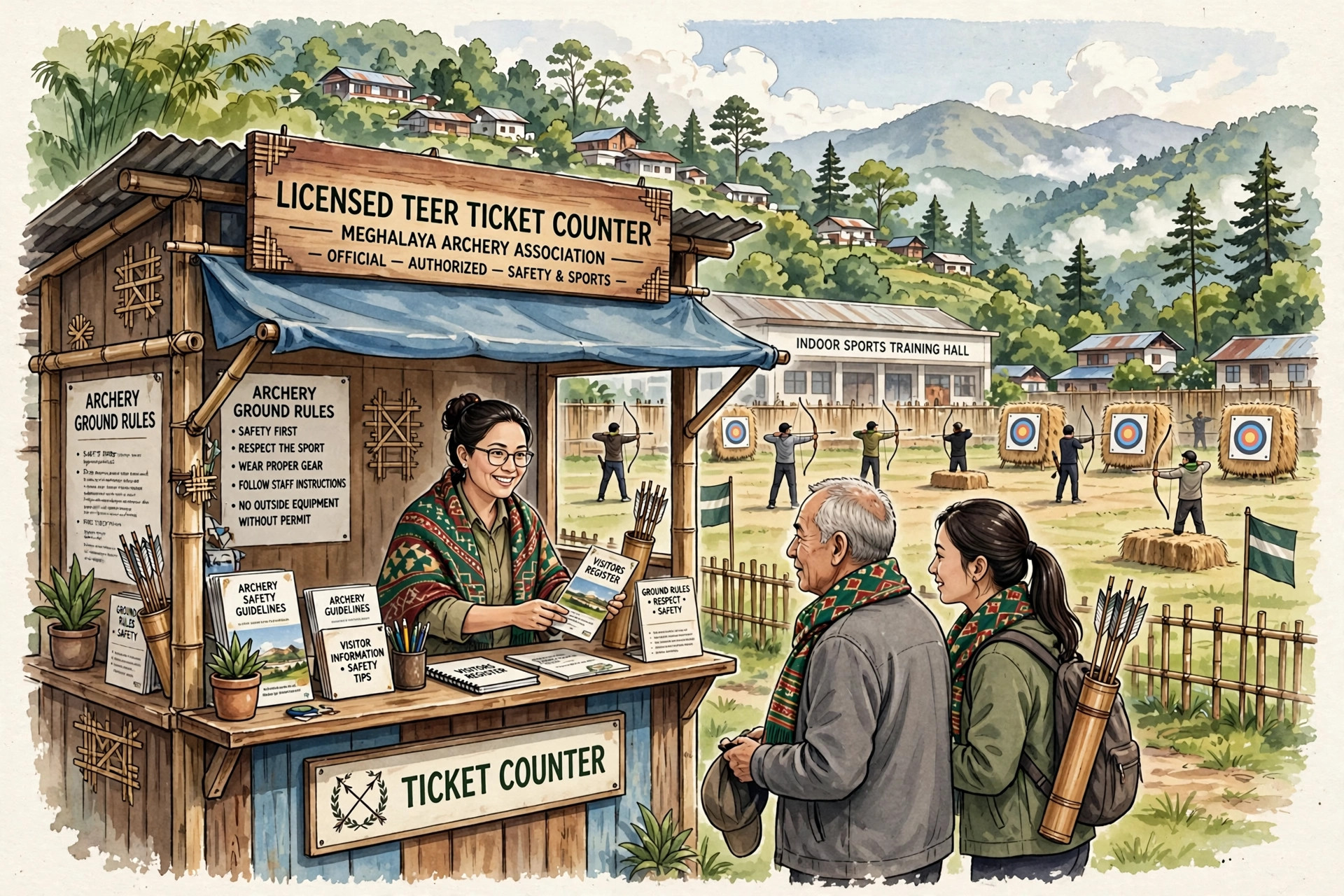
Understanding the teer rules around ticket sales helps explain why the game looks the way it does on the street. Teer tickets are sold at licensed teer counters located in Meghalaya. These counters operate under licenses issued within the framework of the 2018 Regulation Act and the earlier 1982 Amendment Act. Betting takes place before the archery rounds begin, and once the archers start shooting, sales for that round close. The two daily sessions, each with a first round and a second round, follow this rhythm every working day.
Because the licensing is state-issued and game-specific, a teer counter is not the same thing as a lottery agent selling paper lottery tickets in another state. The counter is authorized for arrow-shooting betting, and its authorization comes from Meghalaya’s teer legislation. This is why the game cannot simply be transplanted: the license that makes the counter lawful exists only under Meghalaya law.
Why Teer Tickets Cannot Be Legally Sold Outside Meghalaya
One of the most common misunderstandings is the belief that teer, being legal, can be played or sold anywhere in India. It cannot. The licenses granted under the Meghalaya Amusements and Betting Tax (Amendment) Act, 1982 and the 2018 Regulation Act are valid within Meghalaya. A state law cannot authorize betting activity in another state, and most other states have their own gambling prohibitions that would apply to anyone selling teer tickets there.
There is a second, practical reason. In states where lotteries are banned, any lottery-like sale is already an offence. In states where paper lotteries are permitted, teer is still not among the notified lottery schemes, so selling teer tickets there has no legal cover either. The result is straightforward: the lawful teer market is confined to Meghalaya. Anyone offering teer tickets in another state, whether at a shop counter or through a website, is operating outside the licensing regime that makes teer legal in the first place.
Online Teer Betting and Why Most Online Operations Are Unlicensed
The internet has created a grey market of websites and apps that claim to sell teer tickets or accept teer bets online. Players should understand what the law actually says. The Meghalaya teer legislation licenses physical counters and organizers within the state. It does not create a general license for websites to sell teer tickets to anyone, anywhere. An online operation that takes teer bets from outside Meghalaya, or from players in states where such betting is prohibited, has no basis in the licensing framework described in this guide.
This does not mean every online mention of teer is unlawful; publishing results and information is a different activity from selling tickets. Our own site, for example, is an information service: we publish the declared results so that players can check them conveniently, which is why so many readers land on the Pro Teer Result homepage each day. But a website that actually accepts money for teer bets, especially from outside Meghalaya, is almost certainly unlicensed. Players who use such sites have no regulatory protection if the operator disappears with their money. The safe and lawful route is a licensed counter in Meghalaya, full stop.

What Makes Meghalaya Teer Culturally Unique Among Legal Lotteries
Step back from the statutes for a moment and the deeper difference becomes clear. Every other legal meghalaya lottery style product in India, whether a paper draw or a state online lottery, is an administrative creation: a government designs a scheme, prints tickets, and runs draws. Teer grew in the opposite direction. It began as a traditional archery pastime of the Khasi people, a community sport with deep roots in the hills, and the law eventually caught up to regulate the betting that had grown around it.
That origin shapes everything about the game. The archers are sportsmen, not draw machines. The venue is an archery ground, not a lottery office. The rhythm of the game follows the shooting, and the community gathers around it daily. No other licensed lottery in India is built on a living indigenous sport. When people ask what makes teer special, the legal answer is the 1982 and 2018 acts; the human answer is that it is a cultural tradition that the law chose to license rather than suppress. If you want to learn more about how we document this game, visit our about us page.

Frequently Asked Questions
Is teer legal in India?
Teer is legal in Meghalaya, where it is licensed under Section 14A of the Meghalaya Amusements and Betting Tax (Amendment) Act, 1982 and further regulated by the Meghalaya Regulation of the Game of Arrow Shooting and the Sale of Teer Tickets Act, 2018. It is not licensed in other states, so its legality does not extend across India. Always check your own state’s gambling and lottery laws before participating in any betting game.
What is the Meghalaya Teer Act?
People usually mean one of two laws when they say “meghalaya teer act”. The first is the Meghalaya Amusements and Betting Tax (Amendment) Act, 1982, whose Section 14A licenses bookmakers for arrow shooting and expressly includes the game of teer in its definition. The second is the Meghalaya Regulation of the Game of Arrow Shooting and the Sale of Teer Tickets Act, 2018, which further regulates the game and ticket sales. The Meghalaya Prevention of Gambling Act, 1970 also plays a role by allowing the government to exempt notified games.
How is teer different from a normal lottery?
A normal paper lottery uses pre-printed tickets and a mechanical or computerized draw to pick winners. Teer is archery-based: bettors pick a number from 0 to 99 predicting the last two digits of the total arrows hitting the target in a live archery round. There are two rounds per session, the first round (FR) and the second round (SR). The legal basis is also different: teer runs under Meghalaya’s arrow-shooting legislation rather than the standard state lottery department model.
Can I buy teer tickets online or outside Meghalaya?
No. Teer tickets are licensed for sale at authorized counters within Meghalaya under the state’s teer legislation. There is no general license for selling teer tickets online or in other states, and most websites offering online teer betting operate without any license. Buying from unlicensed sellers leaves you with no legal protection.
How does the teer prize work?
The teer prize is paid as a fixed multiple of the stake, set by the licensed counter, and the multiple differs between the first round and the second round. It is not a rollover jackpot and there are no published prize tiers like a paper lottery. Treat any specific multiplier quoted by third parties as unverified unless it comes directly from a licensed counter.
Who oversees the archery in teer?
The archery side of the game is conducted under the aegis of the Khasi Hills Archery Sports Association, while the betting side is licensed by the Government of Meghalaya under the acts described above. This dual structure, a sports body plus state licensing, is unique among Indian lotteries.
Where can I check the daily teer results?
Declared results are published by organizers and widely reported the same day. You can follow the daily first round and second round outcomes on our teer result list, and if you have questions about this site you can reach us through the contact us page. Remember that we publish results for information only and never prediction numbers.
Conclusion
Meghalaya teer stands apart from every other legal lottery in India. Where other states run paper or machine-drawn lotteries under the Lotteries (Regulation) Act, 1998, Meghalaya licenses an archery-based community game under its own arrow-shooting legislation: the 1982 Amendment Act with its Section 14A, the 2018 Regulation Act, and the exemption powers of the 1970 Prevention of Gambling Act. The game is conducted under the aegis of the Khasi Hills Archery Sports Association, sold through licensed counters inside Meghalaya only, and decided by live archery rather than any draw. That combination of a specific legal foundation and a living cultural tradition is what makes teer unique.
A final note on responsible play: teer is a legal lottery in Meghalaya for adults aged 18 and above only. Like all forms of betting, it should be enjoyed responsibly and never with money you cannot afford to lose. If gambling stops being fun, step away and seek help.