

Most guides about the evening game explain how to read the numbers. This one explains the rules behind them. The night teer result is not just two digits on a card. It is the output of a regulated lottery with laws, licensed counters, prize structures, age limits, and a framework for fair play. Whether you only read the results or you also participate at the counters, knowing these rules protects you from mistakes, scams, and legal trouble. This guide covers the legality of the evening game, how prizes work, how winnings are claimed, why the 18 plus rule exists, and how to keep your play responsible.
Teer occupies a special place among Indian lotteries because it is built on a living tradition. Archers shoot real arrows, officials count real hits, and the winning numbers come from that physical process. The state of Meghalaya regulates this system, which gives the game a legal foundation that most number games in the country do not have. But regulation also means rules, and rules mean responsibilities for everyone involved. Understanding them is part of being a serious follower of the night teer result. You can follow the daily evening numbers on the homepage of Pro Teer Result, and this guide gives you the rulebook to go with them.
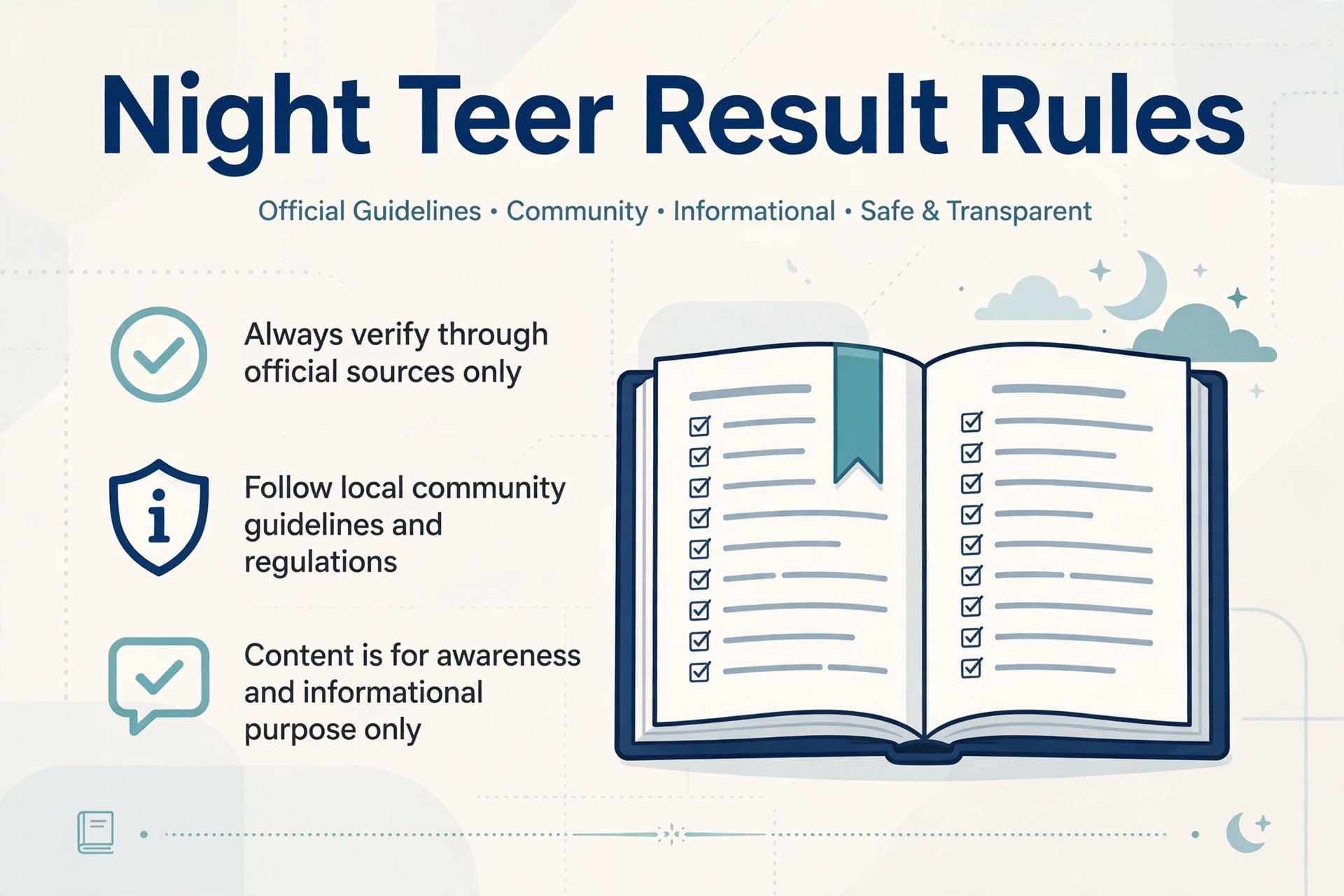
What the Night Teer Result Actually Represents
Every evening, after the last arrow has flown and the counting is finished, a single pair of two digit numbers is published as the night teer result. To a casual reader it looks like a small detail, a first round number and a second round number, but each figure carries a chain of events behind it. Archers stood at the shooting line, officials watched the targets, counters recorded the sale of tickets, and witnesses observed the count. The published numbers are the declared outcome of that whole process, not a draw pulled from a machine and not a figure decided in an office.
This physical character matters because it is the source of trust in the game. In most lotteries the draw happens inside a drum or a computer, and the player must trust the operator. In teer the decisive event happens in the open, where arrows strike a target and every hit can be seen. The night teer result therefore has an unusual property for a lottery outcome. It is verifiable by the community that witnessed it, because the count happened in front of people rather than behind closed doors.
The physical process behind the numbers
The evening session is built on traditional archery. Groups of archers shoot at targets from a set distance, and the number of arrows that hit the target is counted. The last two digits of that count become the winning number for the round. This is why the game is sometimes called archery betting or an archery lottery. The arrows are real, the targets are real, and the count is performed by appointed officials rather than by an automated system.
The shooting takes place under supervision. Officials manage the order of shooting, ensure the targets are handled correctly, and oversee the counting when the round ends. Because the evening game draws large crowds, this supervision is not a formality. It is the practical guarantee that the round was conducted the way the rules require, and it is one of the main reasons the Meghalaya system has survived and grown while informal number games have come and gone.
FR and SR in the night session
The night session consists of two rounds, known everywhere as FR (first round) and SR (second round). Ticket sales for the first round close before the shooting for that round begins, the shooting happens, the count is completed, and the FR number is declared. The same sequence then repeats for the second round, producing the SR number. When you see the night teer result published as a pair, the first figure is always the FR outcome and the second is always the SR outcome.
Each round is a separate contest. A ticket bought for the first round applies only to the FR declaration, and a ticket bought for the second round applies only to the SR declaration. This separation matters for prizes as well, because a win in one round has no bearing on the other. Players who follow the evening game treat the two rounds as two independent events that happen to share one venue and one evening.
How the Night Teer Result Is Declared Each Evening
Declaration is the moment the game turns from a physical event into a public number. It follows a fixed sequence, and understanding that sequence helps you know when the result is final and when a figure you see might still be unofficial.
The shooting round
Before anything can be counted, the archers shoot. The archers take their positions, the targets are set, and the round of shooting proceeds under the direction of the officials. Spectators and participants are present at the venue, which is part of the design. The game was never meant to be a remote draw. It is a public event, and the public presence is what makes the later declaration credible.
Ticket sales for the round must close before the shooting starts. This cutoff is a hard rule in the regulated system, because selling tickets after the arrows have flown would destroy the integrity of the contest. Licensed counters stop selling for the round at the appointed moment, and any ticket stamped for that round after the cutoff should not exist in the system. If someone offers to sell you a ticket for a round that has already been shot, that is a warning sign, not an opportunity.
Counting and verification
When the shooting ends, the count begins. Officials count the arrows that struck the target, and this counting is done openly, in view of the people present. The last two digits of the total become the declared number for the round. Open counting is one of the strongest features of the teer system. It means the result is not announced on authority alone but is produced in a way that the crowd can follow and check.
Where counts are disputed or unclear, the appointed officials are responsible for resolving the matter on the spot. Their decision at the venue is what the licensed counters will settle against. This is another reason to deal only with licensed counters. A licensed seller pays according to the officially declared figure, while an informal seller may argue about the number or simply disappear.
From the venue to publication
Once the officials declare the number, the information moves outward. Counters post it, crowds relay it, and websites publish it. There is always a short delay between the declaration at the venue and the appearance of the number on a website like this one, because the figure must be confirmed before it is published. A responsible publisher waits for confirmation rather than racing to post an unverified figure, and you should prefer publishers who do the same.
This is where the difference between official and unofficial numbers appears. The official night teer result is the figure declared by the supervising officials and settled at the licensed counters. Anything else, a rumor in a message group, a figure posted without confirmation, a number from an unknown source, is unofficial until it matches the official declaration. Treat unofficial figures as noise and never act on them as if they were settled.
How to Read the Night Teer Result Correctly
Reading a result sounds simple, but the format carries conventions that new followers sometimes miss. A few minutes spent understanding the layout saves you from misreading the evening numbers.
FR and SR columns
Result tables for the evening session normally show the two rounds in order: FR first, then SR. This ordering is standard across counters, publishers, and record lists. When you check the night teer result, read the pair left to right as first round and then second round. The distinction matters if you hold a ticket, because a win depends on matching the number for the specific round your ticket covers.
Date and session labels
Each result is tied to a date and a session. The date is the day the shooting took place, and the session label tells you which part of the day it belongs to. On this site the evening session is labeled as the night game, which separates it from the morning and afternoon sessions held earlier in the day. Always confirm both the date and the session before you treat a number as your result. Mixing up sessions is one of the most common reading mistakes, and it is entirely avoidable.
What placeholders mean in published tables
On days when a session has not yet taken place, or when a result has not yet been confirmed, publishers show a placeholder such as “-” instead of a number. This is not a zero and not a missing value. It simply means there is nothing to report yet. A trustworthy table never fills that gap with a guess. When you see the placeholder, wait for the confirmed declaration rather than hunting for the number elsewhere, because anywhere that shows a figure while official tables still show the placeholder is publishing something unofficial.

Is Night Teer Legal – The Short and Long Answer
The short answer is yes, within its regulated framework. Teer is a legal lottery in the state of Meghalaya, operated under state regulation. The evening session, like every other session, is part of this regulated system. The night teer result you read each evening is the declared outcome of a lawful game.
The longer answer has important qualifications. First, the legality is tied to the state. Meghalaya regulates teer through its own framework, and what is legal in Meghalaya is not automatically legal everywhere in India. Lottery laws vary by state, and some states prohibit lotteries entirely. The rules that apply to you depend on where you are standing, not just on where the game is played.
Second, legality comes with conditions. Participation is limited to adults aged 18 and above. Tickets are sold through licensed counters, not through random strangers. The game follows defined procedures for shooting, counting, declaration, and prize payment. A game played outside these procedures, even if it calls itself teer, does not carry the same legal protection.
Third, reading results is not the same as playing. Following the published night teer result on a website is simply reading public information, and it carries no legal risk anywhere. The legal questions only arise around participation, which means buying tickets and claiming prizes. Keep this distinction clear and most of the confusion disappears.
If you want to understand the official side, the Meghalaya government portal is the authoritative starting point for how the state organizes its regulated activities. For general background on how lotteries operate as a concept, the Wikipedia article on lotteries gives useful context on the different forms lotteries take around the world.
How the Night Teer Result Is Regulated
Regulation is what separates teer from an informal betting game. Several layers of oversight shape how the evening session runs.
The state sets the legal framework that allows the game to exist. This includes who may organize it, how venues operate, and what standards apply to the conduct of each session. Licensed organizers run the game within this framework, and they are accountable to it.
At the venue level, appointed officials supervise the shooting and the counting. Their job is to make sure the round is conducted properly and the count is accurate. The open counting, done in front of witnesses, is itself a regulatory feature. It makes the process checkable by the people present, which is far stronger than a promise on paper.
At the counter level, licensed sellers handle tickets and payouts according to set procedures. They record sales, pay prizes against winning tickets, and operate within the rules for their license. This is why experienced followers insist on dealing only with known, licensed counters. An unlicensed seller operates outside the protection of the framework, and any dispute with such a seller is much harder to resolve.
The result publication layer, which includes websites like this one, is not part of the regulation, but it benefits from it. Because the underlying game is supervised, the declared numbers are trustworthy, and publishers can relay them with confidence. When you read the night teer result here, you are reading the output of that supervised chain.
Why the rules are stricter than they look
Newcomers sometimes find the procedures fussy. Ticket cutoffs, licensed counters, ID for claiming, age checks, official declarations only. But each rule exists because of a specific failure it prevents. Cutoffs prevent post shooting sales. Licensed counters prevent vanishing sellers. ID requirements prevent prize theft. Age checks keep minors out. Official declarations prevent rumor based disputes. The system looks bureaucratic only until you see what happens in games that lack these protections, where disputes are settled by whoever shouts loudest.
How Prizes Work in the Evening Game
The prize side of the game is where most misunderstandings live, so let us go through it carefully and honestly.
In teer, a player buys a ticket predicting a two digit number for a round. If the declared number for that round matches the prediction, the ticket wins. The evening session has two rounds, so there are two separate winning numbers each night, the FR and the SR of the night teer result. A ticket is played per round, which means the FR and SR are separate contests for prize purposes.
The amount a winner receives depends on the stake and the payout rate set for the round. Payout rates are a matter for the organizers and counters, and they can vary. The honest advice here is to confirm the exact payout terms at your counter before playing, rather than relying on figures quoted in conversation or on social media. Terms can differ between places and times, and the counter’s stated terms are the ones that apply to your ticket.
It is also worth understanding what the prize is not. It is not a fixed jackpot announced in advance like some national lotteries. It is a payout calculated from the stake according to the round’s rate. This structure is traditional to the game and has worked this way for a long time. Anyone promising you a fixed huge prize for a small stake outside the normal counter system is not describing teer. They are describing a scam.
Keep your tickets safe. A winning ticket is a bearer of value, and losing it usually means losing the prize. Note the date, the session, and the round on your ticket the moment you buy it, so there is never any doubt about what it covers.

How to Claim Night Teer Winnings Step by Step
Winning is only half the process. The other half is claiming correctly, and the claiming procedure is where small mistakes can cost you a legitimate prize. Follow these steps in order.
Step 1 – Confirm the official result. Before you do anything, check the official night teer result for the correct date and session. Make sure you are reading the right round too. A ticket for FR wins only against the FR declaration, and a ticket for SR wins only against the SR declaration. Confirming first prevents the embarrassment of celebrating a number that belongs to a different round or a different day.
Step 2 – Protect the ticket immediately. A winning ticket is valuable to whoever holds it. Fold it safely, keep it in a wallet or envelope, and do not hand it to anyone until you are at the counter. If the ticket has a date, session, and round printed on it, check that the details are complete and readable. If any part is smudged or torn, take a clear photograph of it as a backup record before you travel.
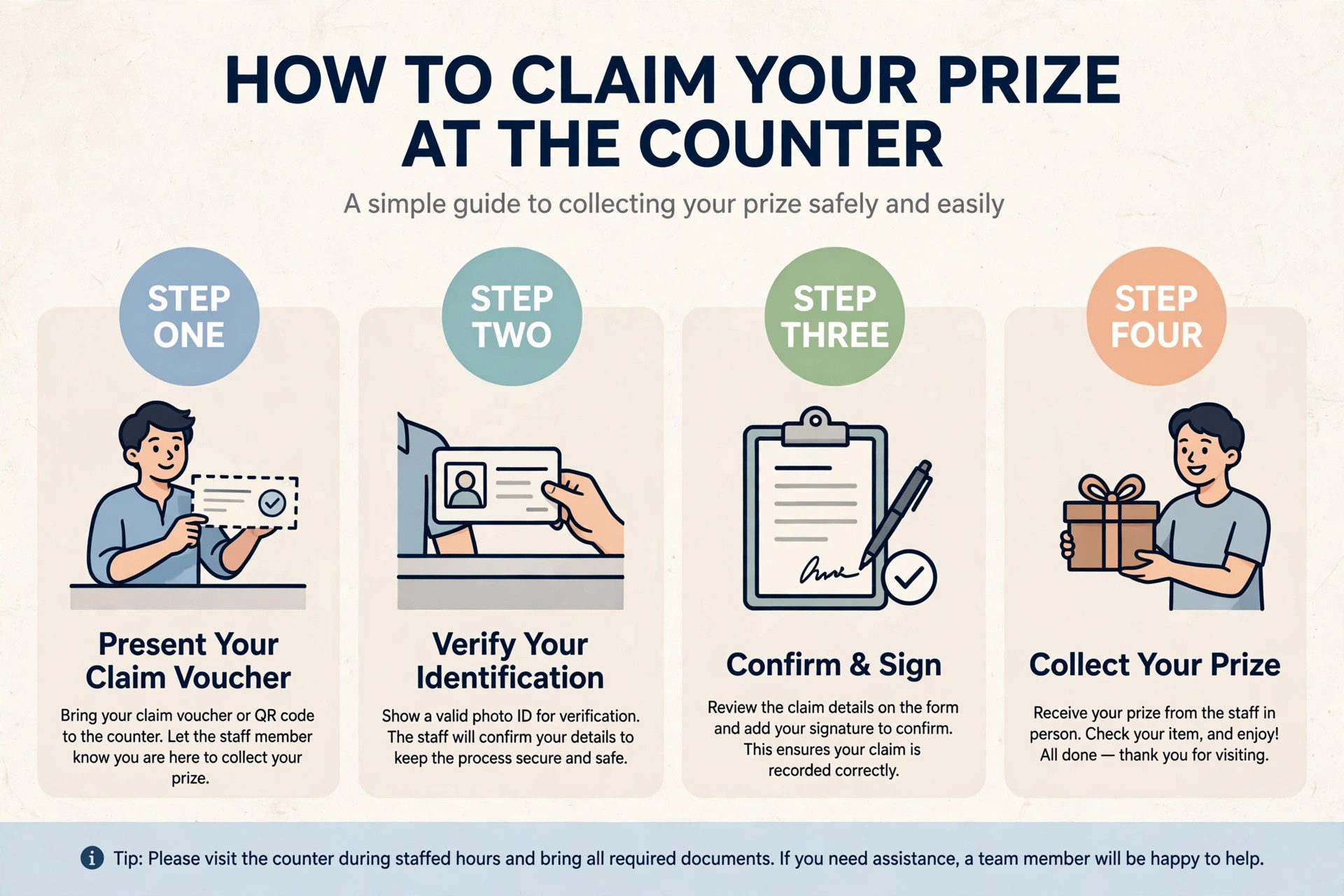
Step 3 – Go to the licensed counter that sold the ticket. Prizes are claimed at the counter, and in most cases the natural place is the same licensed counter where you bought the ticket. Bring a valid ID, because counters verify identity before paying out, particularly for larger amounts. Expect to sign or provide a receipt acknowledgment. This paperwork protects both sides and is completely normal.
Step 4 – Verify the payout against the stated terms. The counter will calculate your prize from your stake and the payout rate for the round. If you confirmed the terms before playing, this should hold no surprises. Count the amount before you leave the counter and keep the receipt or acknowledgment slip. If the payout differs from what was stated when you bought the ticket, raise it on the spot with the counter staff while the transaction is fresh.
Step 5 – Record the claim for your own books. Note the date, the round, the stake, and the amount received. Players who keep simple records understand their actual spending far better than players who rely on memory, and this habit supports responsible play over time.
There is usually a claim window for each prize, meaning you cannot show up months later and expect payment. Ask your counter about the time limit for claims when you buy, and claim promptly after a win rather than letting tickets pile up.
The 18 Plus Rule and Why It Matters
Participation in teer is limited to adults aged 18 and above. This is not a suggestion and not a custom. It is a condition of the regulated framework, and licensed counters are expected to enforce it. Anyone under 18 may read results, learn about the game, and follow the evening session online, but buying tickets or claiming prizes is off limits.
The reasons for the age limit are straightforward. Lotteries involve real money, real losses, and real temptations to chase those losses. Adults are expected to have the financial independence and judgment to set limits and walk away. Minors, by law and by common sense, should not be exposed to that cycle. If you are a parent, this rule also gives you a clear line to draw at home. Results are public information and fine to discuss, but the counter is for adults only.
Counters that ignore the age rule are breaking the conditions of their operation. If you see a counter selling to minors, treat it as a warning sign about that counter’s overall reliability. A seller who cuts corners on age checks may cut corners elsewhere too.
Licensed Counters Versus Unlicensed Sellers
The single most important practical rule in the evening game is also the simplest. Buy only from licensed counters. Everything else in this guide works because the counter is part of the regulated chain. Remove that link and the protections fall away.
A licensed counter operates under the organizer’s framework. Its tickets are part of the official sales record, its payouts follow the declared official night teer result, and its disputes can be taken to the organizing authority. The license is what makes the counter answerable.
An unlicensed seller offers none of this. The tickets may look similar, but they sit outside the official sales record. If your number hits, payment depends entirely on the seller’s goodwill, and there is no authority to appeal to when that goodwill runs out. Unlicensed sellers are also the channel for most scams, from tickets sold after the cutoff to outright invented results. The small convenience of buying from a stranger is never worth the risk of a prize that never gets paid.
How do you recognize a licensed counter? In practice, licensed counters are established, known locations that have operated in the same spot over time, display their authorization, and are recognized by the local organizing body. When in doubt, ask other regular players or check with the organizer which counters are authorized. Never take a stranger’s word that they are licensed.
Common Scams Around the Night Teer and How to Avoid Them
Wherever money and numbers meet, scammers follow. The evening game has attracted several recurring frauds, and knowing their shapes keeps you safe.
The first and most common is the fake result. Someone posts or messages a night teer result figure before the official declaration, or publishes a different number than the official one, hoping readers will trust the message and act on it. The defense is simple. Trust only the official declaration and publishers that wait for confirmation. Any number that appears while official tables still show the placeholder is unofficial by definition.
The second is the guaranteed number seller. These operators claim to know the winning number in advance and sell it for a fee, often through message groups or social media. This is impossible. The number comes from arrows shot in the open and counted in front of witnesses, and nobody can know it before the shooting. Anyone selling certainty is selling fiction. This guide contains no prediction content for exactly this reason, and no honest guide does.
The third is the fake counter or agent. A stranger offers tickets at a discount, takes your money, and either never issues a real ticket or vanishes before the declaration. The defense is the licensed counter rule. If the seller is not a known licensed counter, the ticket is not worth the paper it is printed on.
The fourth is the advance fee prize scam. You receive a message saying you have won a prize in the night game and only need to pay a release fee or share bank details to collect it. Real prizes are claimed at the counter with the physical ticket. Nobody who actually owes you money asks you to pay first, and nobody legitimate needs your bank details over a message.
The pattern across all four is the same. The scammer separates you from the regulated chain, either by offering unofficial numbers, unofficial tickets, or unofficial claims. Stay inside the chain and the scams lose their grip.
Night Session Versus Morning and Afternoon Sessions
Teer is played in multiple sessions across the day, and the night session is the one this guide covers. The morning and afternoon sessions follow the same basic structure, two rounds of archery, open counting, FR and SR declarations, licensed counters, but they are separate events with separate tickets, separate cutoffs, and separate results.
A ticket bought for a morning session cannot win against the night teer result, and a ticket bought for the night session cannot win against a morning declaration. Each session stands alone. This separation is why session labels matter when you read results and why counters are strict about which session a ticket covers.
The night session is the most widely followed of the three, partly because evening is when most people are free to check, and partly because the evening game has the longest tradition. The morning and afternoon sessions serve players who prefer earlier play, but the rules, the 18 plus limit, the licensed counter requirement, and the claiming procedure are the same across all sessions. Only the timing of the shooting differs.
If you follow more than one session, keep your tickets and your records separated by session and by round. Mixing a morning FR ticket with a night SR expectation is an easy mistake when you hold several tickets, and a simple labeled envelope for each session prevents it. You can compare the different sessions on the Shillong Teer result page and the dedicated Shillong night teer result page to see how each session is presented.
How to Keep Records of Past Night Teer Results
Serious followers keep simple records, not to predict anything, but to verify and to learn. A basic record habit has three parts.
First, save the official result for each evening with the correct date, marking the FR and SR figures clearly. Over time this builds a personal archive that you can check against any disputed memory. The teer result list on this site is the public version of such an archive, and it is worth bookmarking.
Second, if you participate, log your tickets next to the results. Record the date, the session, the round, your stake, and the outcome. This single habit does more for responsible play than any lecture, because it replaces vague impressions about winning and losing with exact numbers.
Third, review your records monthly rather than daily. Daily review feeds the urge to chase patterns that do not exist. A monthly review shows you the honest totals, how much was spent, how much was returned, and whether the game is still entertainment or becoming a problem. Records are for clarity, not for finding secrets in the numbers, because there are no secrets to find.
Responsible Play and Fair Play Together
Fair play has two sides. One side belongs to the organizers, the licensed counters, and the officials who run the evening session properly. The other side belongs to the players, and that side is called responsible play.
Responsible play starts with treating the game as entertainment with a cost, never as income, investment, or a solution to money problems. Set a fixed budget for tickets before the week begins and treat it as spent money, the same way you would treat a cinema ticket. When the budget is gone, stop until the next period. Chasing losses by increasing stakes is the fastest way to turn a small hobby into a serious problem.
Keep the game social and transparent. Players who hide their spending from family, borrow money to play, or feel anxious when they cannot play are showing warning signs. If you notice these signs in yourself, step back and talk to someone you trust. There is no shame in admitting a hobby has grown too large, and there is real danger in pretending it has not.
Respect the rules even when nobody is watching. Do not buy from unlicensed sellers because it is convenient, do not lend your ID for someone else’s claim, and do not pressure a minor to buy or claim on your behalf. The framework only works when the people inside it uphold it.
Finally, remember what the night teer result is for. It is the record of an evening of traditional archery, a cultural event that has been legalized and regulated so it can continue openly. Following it, discussing it, and even participating at a licensed counter are all fine when done within the rules. Keeping it enjoyable means keeping it bounded.

FAQ – Night Teer Result Rules and Fair Play
Is the night teer result officially declared somewhere?
Yes. The official night teer result is declared at the venue by the appointed officials after the shooting and the open counting for each round. Licensed counters settle tickets against this official declaration. Websites, message groups, and social media pages only republish the figure. If a number you see does not match the official declaration, the official one is the figure that counts for prizes.
What is the difference between the FR and SR numbers?
FR is the first round number and SR is the second round number of the evening session. The two rounds are separate contests. A ticket bought for the first round is judged only against the FR declaration, and a ticket bought for the second round is judged only against the SR declaration. When you read the night teer result as a pair, always read it left to right as FR then SR, and match your ticket to the correct round.
Can I participate in the night game from a state where lotteries are banned?
Lottery laws differ from state to state in India, and what is legal in Meghalaya is not automatically legal where you are. Reading the published night teer result is simply reading public information and carries no risk, but buying tickets and claiming prizes are governed by the laws of your own state as well as Meghalaya’s framework. If your state prohibits lotteries, participation is not protected there. When in doubt, treat result reading as the safe activity and check your local law before anything else.
How old must I be to buy a ticket or claim a prize?
You must be 18 or older. This is a firm condition of the regulated system, and licensed counters are expected to enforce it. Minors may read results and learn about the game, but ticket purchase and prize claims are for adults only. A counter that sells to minors is breaking its operating conditions, which is itself a warning sign about that counter.
Where should I buy tickets for the night session?
Only at licensed counters. Licensed counters operate within the organizer’s framework, record their sales officially, and pay prizes against the official night teer result. Unlicensed sellers operate outside every protection, and tickets bought from them may not be honored. Look for established counters with visible authorization, recognized by the local organizing body, and avoid strangers offering tickets at a discount.
What should I do if I lose a winning ticket?
Act quickly. A winning ticket is valuable to whoever holds it, and without it a claim becomes very difficult. If you took a photograph of the ticket or kept the purchase receipt, bring those to the licensed counter immediately and explain the situation. Policies on lost tickets are strict, because the counter must be sure it pays the rightful holder. The real lesson is prevention. Photograph every ticket at purchase, note the date, session, and round, and store tickets securely until you have claimed or confirmed the result.
Are number prediction sellers and dream number charts reliable?
No. The winning number comes from arrows shot and counted in the open, and nobody can know it before the shooting happens. Anyone selling guaranteed numbers, hit numbers, or target numbers is running a scam. This guide carries no prediction content for that reason. Treat every paid prediction offer as fraud and report it rather than buying it.
What happens if the night session is delayed or cancelled?
Sessions can occasionally be delayed or cancelled for weather, venue issues, or official holidays. When that happens, there is no official result for the evening, and publishers show a placeholder instead of a number. Do not accept a figure from any unofficial source on such days. Wait for the official announcement about rescheduling, and keep your tickets for the session they were bought for, since they apply to that session whenever it is held.
Conclusion
The night teer result is a small piece of text that stands on a large foundation. Behind every evening pair of numbers there is a legal framework in Meghalaya, licensed organizers, supervised archery, open counting, licensed counters, age limits, and a claiming procedure. Understanding that foundation is what turns a casual reader into an informed follower.
The rules are not there to make the game difficult. They exist to make it trustworthy, to protect your tickets, your prizes, and your money, and to keep a traditional archery event running openly within the law. Read the results from confirmed sources, buy only from licensed counters, claim promptly with your ticket and ID, respect the 18 plus rule, and keep your play responsible and bounded. Do that, and the evening game stays what it should be, a lawful tradition you can follow with confidence every night.