
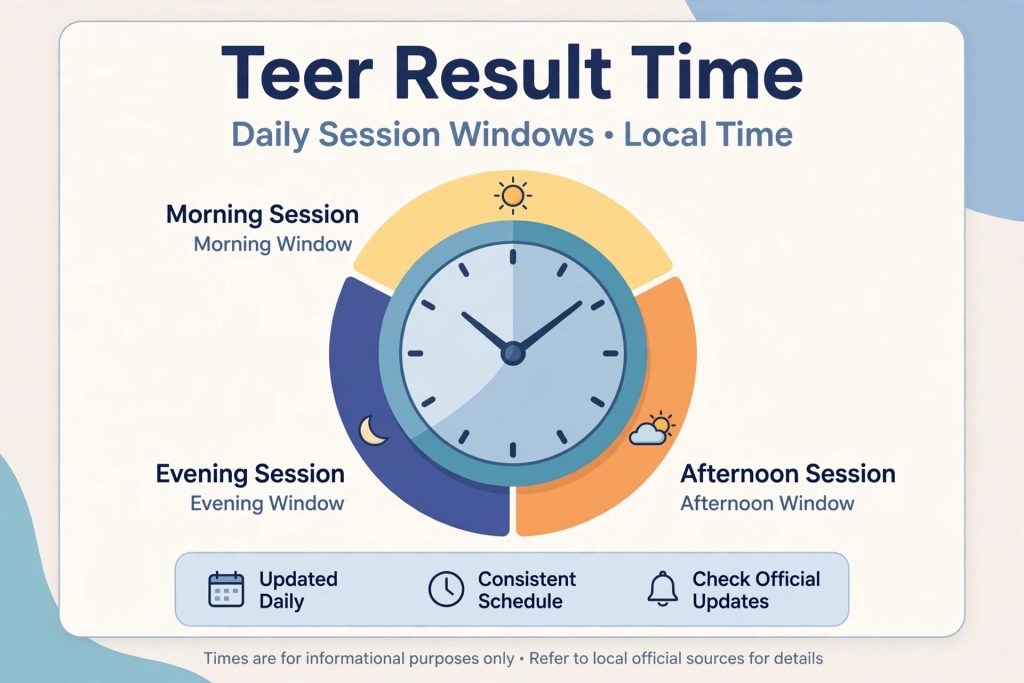
If you follow teer regularly, you have probably noticed something odd. Two different websites can show slightly different times for the same session, and a result that arrived at one hour yesterday may arrive fifteen minutes later today. Understanding teer result time properly means accepting one core idea first. Every published time is an approximation of a live event, not a train timetable. This guide is the detailed timing reference for Pro Teer Result readers. It explains why timings are approximate, what the typical windows look like for Shillong, Juwai, Khanapara and the night sessions, how holidays and weather move the clock, how to convert times when you live outside India, and what to do when a result seems late. All times here are in Indian Standard Time, game days run Monday to Saturday, and Sunday is a holiday across every market.

Teer Result Time – Why Every Published Time Is Only an Approximation
The single most useful thing you can learn about teer result time is that it describes a human process, not an automated one. Teer is an archery based lottery conducted on physical grounds in Meghalaya. Archers shoot arrows at a target, counters count the arrows that hit, officials verify the count, and only then is a number declared. Every step involves people, weather, crowds and judgment calls. That is why experienced followers treat every teer result timing figure as a typical window and check the live result cards on this site for the actual declaration.
What a “declaration time” actually measures
When a website says a result is declared at a certain hour, it is usually describing when the shooting round finished and counting began, or when the verified number was announced at the ground. Those are two different moments, and they can be ten to thirty minutes apart. Some sources report the round completion, others report the announcement. Both are honest, and both can be correct, which is exactly why two sites can show different times for the same session. Neither is necessarily wrong.
The archery round and the counting pause
Each teer session has two rounds, universally labeled FR (first round) and SR (second round). In each round, a set number of archers shoot a set number of arrows at the target within a fixed shooting period. When shooting ends, officials collect and count the arrows that struck the target. The result number is derived from the last two digits of that count. Counting is fast on a clear day with a small crowd and slower when conditions are difficult. The pause between the end of shooting and the announcement is the biggest single source of timing wobble in teer result time.
The honest range behind every schedule table
Because of the process above, every schedule you see online is really a summary of hundreds of past declarations. Organizers and long running result sites converge on windows like “usually around the middle of the afternoon” because that is where most declarations land. A result that arrives five minutes early or twenty minutes late is still inside normal behavior. Only when a result misses its whole window by an hour or more is something genuinely unusual happening, and this guide covers those cases in the troubleshooting section below.
Teer Result Time Today – The Typical Daily Windows
This section gives the typical teer result time windows for every major market. Treat each as approximate. Minor shifts of a few minutes happen daily, larger shifts happen on some days, and the live result cards on Pro Teer Result always carry the actual declared time. For the full archive of declared results, see the complete teer result list.
Shillong Morning Teer time
The Shillong morning session is the earliest market of the day. Its first round is usually declared in the morning window and its second round later the same morning. Morning teer result time is popular with readers who like to check results before the workday gets busy. On most game days the morning FR lands within a few minutes of the usual mark, while the morning SR can drift a little more because it follows the full cycle of the first round.
Juwai Morning Teer time
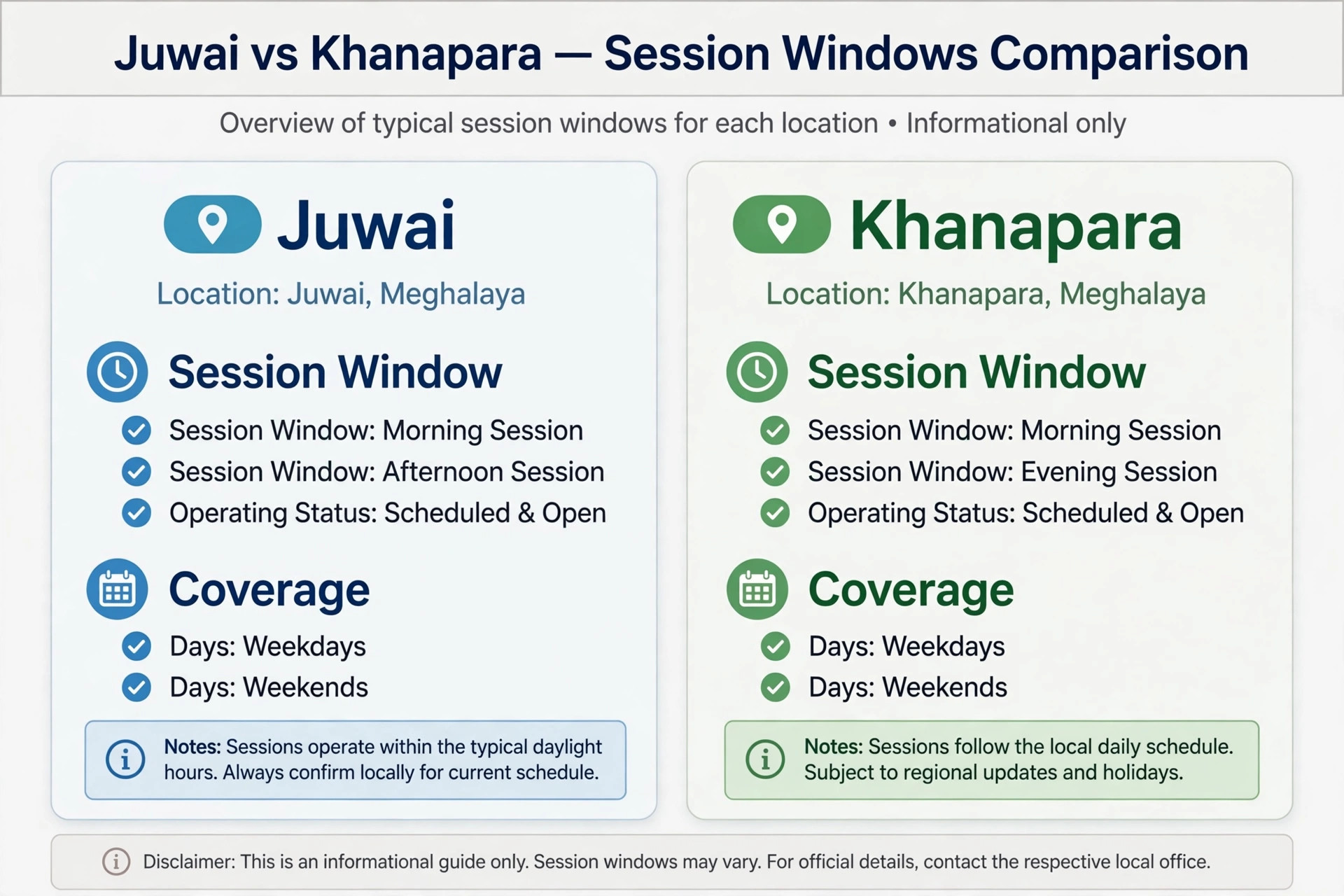
Juwai runs its own morning session on a separate organizer clock. The first round is typically declared in the morning window, and the second round later the same morning. Notice how close this is to the Shillong morning teer time. The markets are different events with different archers and counters, so their numbers are independent, but their schedules were set in the same era and follow the same logic. For session by session updates, visit the Juwai teer result page.
Khanapara Morning Teer time
Khanapara Teer, the Guwahati region market, starts a little later in the morning. Its first round is usually declared in the late morning window and its second round around midday. Khanapara teer time sits between the early morning sessions and the afternoon sessions, which makes it a natural midday checkpoint for readers who follow multiple markets.
Juwai Teer time (afternoon session)
The main Juwai session runs in the afternoon. Its first round is typically declared in the early afternoon window and its second round later in the afternoon. Juwai teer time in the afternoon is one of the earlier afternoon windows, which is why many readers check it first before the bigger Shillong and Khanapara afternoon sessions.
Shillong Teer time (main session)
The main Shillong session is the most followed teer market in the world. Its first round is typically declared in the mid afternoon window, and its second round typically follows in the late afternoon to early evening window. Shillong teer time draws the most attention, which also means it generates the most confusion when it shifts. A fifteen minute move in the Shillong window is noticed by thousands of readers, but it is still completely normal. The dedicated Shillong teer result page carries each day’s actual declaration.
Khanapara Teer time (main session)
The main Khanapara session runs close behind Shillong in the afternoon. Its first round is typically declared in the late afternoon window, and its second round in the early evening window. Because Khanapara teer time overlaps the Shillong window, readers sometimes assume the two markets are linked. They are not. They are separate events that simply happen to be scheduled in the same part of the afternoon.
Jowai and Ladrymbai Teer time
The Jowai and Ladrymbai markets run a compact afternoon session. The first round is typically declared in the late afternoon window and the second round shortly after, still within the afternoon window. This is the tightest FR to SR gap of any market, which reflects a smaller shooting setup and a faster counting process.
Night Teer time
The night sessions close out the teer day. Both the Shillong night session and the general night session typically declare their first round in the evening window and their second round later in the evening. Night teer time is convenient for readers who work during the day, but it is also the session most affected by evening weather and by cumulative delays from earlier in the day, so its window can stretch a little wider than the morning windows.
How Teer Result Timing Differs Between Organizers
One reason teer timing confuses newcomers is that there is no single central clock. Each market is run by its own organizing body, and each body sets its own schedule within a shared tradition.
Separate organizers, separate clocks
Shillong Teer, Juwai Teer, Khanapara Teer, Jowai Teer and Ladrymbai Teer are organized independently. Each organizer decides the shooting start time for its grounds, manages its own archers and counters, and declares its own results. The schedules look similar because the markets grew up together and serve the same audience, not because one authority dictates them all.
Why the windows overlap but never match exactly
Afternoon is the natural home of teer. Archery needs daylight, counters need visibility, and players need time to place their participation before shooting starts. Every organizer independently arrived at an afternoon slot, which is why the Shillong, Khanapara and Jowai afternoon windows all sit within a couple of hours of each other. They overlap by tradition and practicality, and they differ by minutes because each ground runs at its own pace.
What a small shift actually signals
When one market shifts by ten minutes and the others do not, it almost always reflects something local. A late start on one ground, a longer count, a brief administrative pause. It does not signal coordination between markets, and it does not predict anything about the numbers. Experienced readers simply note the shift and move on. The number declared is independent of the minute it was declared in.

Sunday Holidays and Public-Holiday Schedules
Teer is a six day a week game. Understanding the holiday calendar is as important as knowing the daily windows, because the most common “missing result” is simply a holiday nobody noticed.
Why Sunday is always a rest day
Sunday is a holiday for every teer market, every week, without exception. No archery is conducted, no numbers are declared, and no result will appear on any genuine result site. If you see a site claiming a Sunday teer result, treat it with deep suspicion, because the real markets are closed. This weekly pause is the oldest and most stable rule in teer scheduling.
National and state holidays that pause play
Beyond Sundays, teer pauses on major public holidays. Republic Day, Independence Day and Gandhi Jayanti are observed, along with important Meghalaya state holidays and major festivals. The exact list varies slightly from year to year and can differ between organizers, because a holiday observed in Shillong might be a normal working day for the Khanapara ground near Guwahati, or the reverse. When only some markets pause, the others continue on their normal teer result time windows.
Festival weeks and irregular schedules
Festival periods deserve special attention. During long festivals, an organizer may pause for multiple consecutive days, shift a session earlier or later, or run a reduced schedule. These changes are usually announced a day or two in advance at the grounds and picked up by result sites. If you follow teer daily, festival weeks are the one time of year when you should actively look for schedule notices rather than assuming the normal windows.
How holiday notices reach players
There is no single official online bulletin that every player reads. In practice, holiday information travels through the grounds themselves, through local ticket counters and through result websites that track the calendar. Pro Teer Result marks holidays on its result pages so readers can distinguish a holiday from a delay. When a date shows no result and no delay notice, checking whether it was a Sunday or a public holiday is always the first step. You can also consult the Government of India portal at india.gov.in for the national holiday calendar that shapes many of these pauses.
Monsoon, Weather and Other Delay Triggers
Meghalaya is one of the wettest places on earth, and teer is an outdoor sport. Weather is the second biggest mover of teer result time after the counting process itself.
Heavy rain in the Khasi and Jaintia Hills
The monsoon season, roughly June through September, brings intense rainfall to Shillong, Jowai and the surrounding hills. Archery cannot be conducted safely in a downpour, so shooting may start late, pause midway or be postponed. On heavy rain days, afternoon sessions can slide by thirty minutes to an hour, and in extreme cases a session may be cancelled. Morning sessions are sometimes less affected because the heaviest rain often builds later in the day, but there are no guarantees.
Transport and counting delays
Even on dry days, logistics can move the clock. Archers, officials and counting staff travel to the grounds from surrounding areas. A transport disruption, a late arriving official or a larger than usual crowd at the counters can each add minutes. These are ordinary operational frictions, and they explain most of the small day to day variation in teer result timing that readers notice.
Administrative pauses
Occasionally a session pauses for administrative reasons. An inspection visit, a dispute that needs settling at the ground, or a procedural check can hold up the declaration. These pauses are usually short and rarely announced in advance. Result sites typically learn about them the same way readers do, by watching the clock pass the usual window.
What a weather delay looks like on a live page
On a well maintained result site, a delayed session does not just sit blank. The page typically shows the session as pending, sometimes with a short note that the declaration is delayed. The declared time, when it finally appears, is the actual time the number was announced at the ground, not the originally expected time. This is worth remembering when you compare a delayed day against the typical windows in this guide. The guide describes the usual case. The live page describes today.
Time Zone Notes for Readers Outside IST
Teer result time is always published in Indian Standard Time, and a large share of online readers now live outside India. A little time zone discipline prevents a lot of confusion.
IST is UTC plus 5 hours 30 minutes
Indian Standard Time is five hours and thirty minutes ahead of Coordinated Universal Time, and India does not observe daylight saving. That half hour offset trips up readers who are used to whole hour differences. To convert any teer result time to UTC, subtract five hours and thirty minutes. A first round typically declared in the afternoon in IST therefore lands in the morning hours UTC.
The daylight saving trap
If you live in a country that observes daylight saving, your offset from IST changes twice a year while IST itself never moves. A reader on the US East Coast, for example, is nine and a half hours behind IST in winter and ten and a half hours behind in summer. That means the same afternoon session appears an hour earlier on their local clock after the spring forward. Many “the result came early today” complaints from overseas readers are really just daylight saving changes. The teer result time did not move. Their clock did.
Why the page date matters as much as the clock
For readers far west of India, an evening session can land on a different calendar date. A night session first round typically declared in the evening IST lands in the afternoon UTC the same day, which is morning in the Americas. But a reader in the Pacific time zone checking at what feels like evening may actually be looking at the previous day’s session. Always match the date shown on the result card to the date you intend, not just the session name. The Pro Teer Result homepage labels every card with its full date for exactly this reason.
The Gap Between Official Declaration and Website Updates
Even when you know the typical windows, there is a second timing question. Why does a result declared at the ground take extra minutes to appear on your screen? The answer is the relay chain.
The relay chain from ground to screen
A teer result travels several steps before it reaches a website. The number is announced at the ground, relayed to the organizer’s contacts, picked up by result publishers, entered into publishing systems and then rendered to readers. Each step takes minutes, and publishers rightly wait for confirmation before posting, because publishing an unconfirmed number would be far worse than publishing a confirmed number a few minutes late. A gap of a few minutes between the ground announcement and the website update is the system working correctly, not failing.
Why two sites can disagree for a few minutes
Different publishers sit at different points in the relay chain and apply different confirmation standards. One site may post the moment its ground contact reports the number, while another waits for a second confirmation. During those minutes the two sites will show different states, one updated and one still pending. Both are behaving responsibly. The disagreement resolves itself as soon as the slower publisher’s confirmation arrives.
How long a lag is still normal
As a rule of thumb, a website update lag of up to about ten to fifteen minutes after the typical declaration window is ordinary. Beyond thirty minutes with no update and no delay notice, it is worth checking a second source or looking for a holiday or weather notice. Beyond an hour, something genuinely unusual is happening, and the troubleshooting section below applies. Note that this lag is separate from the declaration itself shifting. A site can only publish what has been declared.
Teer Result Time – A Short History of How the Schedule Settled
Today’s teer result time pattern feels permanent, but it was built up over decades. Knowing the history helps you understand why the schedule looks the way it does and why it is stable but not frozen.
The original afternoon-only pattern
Teer began as an afternoon activity, and for a long stretch of its history there was effectively one session that mattered. Archery in the afternoon suited the climate, the working rhythms of the towns and the logistics of gathering archers and counters. The afternoon window that Shillong still uses is the direct descendant of that original pattern. Everything else in the modern schedule was added later.
How morning sessions emerged
As teer grew in popularity, demand grew for more sessions. Morning sessions were the natural expansion. They used the same grounds, many of the same archers and the same counting procedures, simply shifted to the morning hours. Shillong Morning and Juwai Morning settled into the late morning windows they still use, and Khanapara Morning found its slightly later slot. The morning sessions also served a practical purpose. They gave working players a result to check before the afternoon session began.
The arrival of the night session
The night session is the newest major addition to the schedule. Evening archery under lights extended the teer day for players who could not follow the daytime sessions. Night teer time, with the first round in the early evening and the second later in the evening, completed the three part rhythm of morning, afternoon and night that defines the modern teer day. Teer is conducted as a legal lottery in Meghalaya under state regulation, and you can read about the state’s governance framework on the official Meghalaya government portal.
Why the pattern is stable but not frozen
The current pattern has been stable for years because it works. Organizers, archers, counters and players all plan around it. But it is not frozen. Organizers still adjust start times occasionally, add or consolidate sessions and respond to local conditions. When a lasting change happens, result sites update their reference windows, and guides like this one get revised. The stability you see is maintained by continuous small adjustments, not by a rule carved in stone.

Troubleshooting – Result Not Showing Yet
This is the section to bookmark. When a teer result time window has passed and your screen still shows a pending session, work through these steps in order before assuming anything is wrong.
Step 1 – Confirm it is a game day
Check the calendar first. Is today Sunday? If so, every market is closed and no result will appear. Is today a public holiday or a festival day? Check the holiday section of this guide and any notice on the result page. The single most common cause of a “missing” result is a holiday the reader did not notice.
Step 2 – Check whether the window has actually passed
Compare the current time against the typical windows in this guide, remembering that they are approximate. If the first round is usually declared around a certain hour and only ten minutes have passed since then, you are still inside normal variation. Give it at least twenty to thirty minutes past the usual mark before treating the result as late. Also confirm you are comparing in IST, not your local time zone.
Step 3 – Rule out delays and holidays
Look for a delay notice on the result page. During monsoon season, assume weather is a candidate explanation for any afternoon or evening session. Check whether other markets are also pending. If every market is quiet, a widespread cause like a holiday or severe weather is more likely than a problem with one publisher. If only one market is pending while the others have updated, a local delay at that ground is the likely story.
Step 4 – Refresh correctly and check your connection
Do a proper refresh of the page rather than staring at a stale tab. On most browsers a hard refresh clears the cached version. Check that your connection is actually live by loading another site. Try the result page in a private or incognito window to rule out a caching issue. A surprising number of “late results” are just a browser showing yesterday’s page from cache.
When a missing result is genuinely unusual
If it is a confirmed game day, the full typical window plus an hour has passed, other sources are also silent and there is no weather or holiday explanation, then the delay is genuinely unusual. In that situation the responsible move is patience, not speculation. Unusual delays have ordinary causes far more often than dramatic ones, and the result will appear once the ground process completes. Avoid sites or social media accounts that fill the silence with invented numbers. No declared result means no number exists yet, and anyone publishing one is guessing.
Myths about “late” results
Three myths deserve a quick burial. First, a late declaration does not mean the result is being manipulated. The counting process is the same regardless of the clock. Second, a result that arrives early is not suspicious. Early shooting and fast counting happen on smooth days. Third, the minute of declaration has no relationship to the number declared. Teer result time tells you when to look. It never tells you what you will see.
How to Read a Teer Result Card Without Confusion
Result cards are simple once you know the conventions, and most confusion comes from reading them too fast.
FR and SR labels
Every session shows two numbers, labeled FR for the first round and SR for the second round. They are independent results from two separate rounds of archery. There is no arithmetic relationship between them. Do not try to derive one from the other.
The dash placeholder and what it means
Before a round is declared, its slot typically shows a dash. A dash means “not yet declared.” It is not a zero, not a hidden number and not a placeholder for a number someone knows. When the round is declared, the dash is replaced by the actual two digit result. Example only, not a real result: a card might show FR as “-” in the morning and the declared number in the afternoon.
Reading the date line first
Always read the date on the card before the numbers. Result archives keep many days visible at once, and it is easy to read yesterday’s numbers while thinking they are today’s. This matters most around midnight and for overseas readers in distant time zones. Date first, session second, numbers third. That order prevents nearly every misreading.

Teer Result Time – Frequently Asked Questions
What is the teer result time today?
Teer result time today follows the usual daily windows for each market, with morning sessions typically declaring late morning, afternoon sessions typically declaring mid to late afternoon and night sessions typically declaring in the evening, all in IST. Because exact minutes vary, check the live result cards on Pro Teer Result for today’s actual declared times rather than relying on any fixed schedule.
Why does teer result timing change slightly every day?
Teer result timing shifts because each declaration depends on a live archery round followed by manual counting and verification. Shooting can start a few minutes early or late, counting speed varies with conditions and officials verify before announcing. These small variations are normal and expected.
What is the Shillong teer time for the main session?
The main Shillong session typically declares its first round in the mid afternoon window and its second round in the late afternoon to early evening window. These are approximate windows. The exact declaration moment varies by day, so confirm on the live result page.
What is the Juwai teer time and how does it differ from Shillong?
The main Juwai session typically declares its first round in the early afternoon window and its second round later in the afternoon, which is earlier than the main Shillong session. Juwai also runs a morning session in the morning window. The markets are run by separate organizers, so their timings and their results are fully independent.
What is the Khanapara teer time?
Khanapara Teer typically declares its morning first round in the late morning window and its morning second round around midday. The main afternoon session typically declares its first round in the late afternoon window and its second round in the early evening window. All are approximate windows.
Is there teer on Sunday?
No. Sunday is a holiday for every teer market. No sessions are conducted and no results are declared. If a website claims to show a Sunday teer result, it is not showing a genuine market declaration.
Why is the night teer result sometimes later than usual?
Night teer time can stretch because evening weather affects the grounds, because cumulative delays from earlier sessions push the evening schedule back and because visibility based counting takes longer after dark. A night session running twenty to thirty minutes past its usual window during monsoon season is within normal behavior.
How do I convert teer result time to my time zone?
Subtract five hours and thirty minutes from any IST time to get UTC, then apply your local offset from UTC. Remember that India does not observe daylight saving, so if your country does, your offset from IST changes twice a year. Always double check the date on the result card as well, since evening IST sessions can fall on a different calendar date where you live.
The result was declared but the website has not updated. Is something wrong?
Usually not. There is a normal relay gap of several minutes between the announcement at the ground and the update appearing on a website, while publishers confirm the number. A lag of up to about fifteen minutes is ordinary. If an hour passes with no update anywhere, check for holiday or weather notices.
Can the exact minute of declaration tell me anything about the result?
No. The timing of a declaration and the number declared are completely independent. Teer result time tells you when to check. It carries no information about what the number will be, and anyone claiming otherwise is misleading you.
Conclusion
Teer result time is best understood as a set of well observed habits rather than a set of fixed appointments. The morning, afternoon and night windows described in this guide reflect where declarations usually land, shaped by archery rounds, counting, weather, holidays and the independent clocks of separate organizers. Use the windows to plan when to check, use the live result cards on Pro Teer Result for the actual declared times, and work through the troubleshooting steps before worrying about a late result. That combination of approximate expectations and verified live data is the expert way to follow teer timing.
A responsible note to close. Teer is a legal lottery conducted in Meghalaya and participation is strictly for adults aged 18 and above. If you choose to participate, do so responsibly, within limits you can afford, and treat it as entertainment rather than income.