
If you have spent any time looking at lottery results from Northeast India, you have probably seen the phrase Shillong Teer and wondered what it actually means. The question what is shillong teer comes up constantly from newcomers, tourists visiting Meghalaya, and curious readers who stumble across daily result pages for the first time. The short answer is that Shillong Teer is a legal, government regulated archery based lottery played every working day in Shillong, the capital of Meghalaya. The longer answer is far more interesting, because this game sits at the intersection of tribal tradition, state law, community life, and the modern lottery economy. This guide explains everything a beginner needs to know: how the teer game works, why it is legal, where it came from, what role it plays in Khasi culture, and how to approach it responsibly whether you are a curious reader, a first time player, or a tourist who wants to watch the archers in action.
What Is Shillong Teer – The Short Answer for Beginners
At its core, Shillong Teer is a lottery where the winning number is decided not by a spinning machine or a computer draw, but by real people shooting real arrows at a real target. Every day except Sundays and public holidays, dozens of skilled archers gather at licensed teer grounds in Shillong. They shoot arrows in two rounds, called the First Round (FR) and the Second Round (SR). Officials count the arrows that hit the target, and the last two digits of that count become the winning number for the round. Players buy inexpensive tickets at licensed counters before each round, choosing a number between 00 and 99. If the number they chose matches the declared result, they win a prize.
That description makes the teer game sound simple, and in many ways it is. The price of a ticket is small, the rules fit on a single page, and the whole draw takes only a few minutes. But the game is wrapped in layers that make it unique in the world of lotteries. It is one of the very few lotteries anywhere that depends on human skill instead of pure chance. It is rooted in a tribal archery tradition that is centuries old. It is organised openly under Meghalaya state law, with licensed operators, fixed timings, and tax paid to the state. And it is woven into the daily rhythm of Shillong, where shopkeepers, office workers, drivers, and visitors all pause for a few minutes in the afternoon to hear what number the arrows decided.
The name itself tells part of the story. “Teer” is the Hindi word for arrow, and Shillong is the hill city where the game is organised. When people ask what is shillong teer, they are really asking about all of these things at once: the sport, the lottery, the law, and the culture. The rest of this article takes each of those threads apart so you can understand the full picture.
How Teer Works – Two Rounds of Archery, Two Chances Daily
Understanding how teer works is the foundation for everything else, because the mechanics explain the timings, the result format, and even the legal logic of the game. Unlike most lotteries where a result is a random draw from a drum, the Shillong Teer result is produced by an athletic event that anyone can watch.
The First Round (FR) and the Second Round (SR)
Each playing day has two rounds. The First Round, usually called FR, takes place in the afternoon. Archers are given a fixed time, generally around five minutes, to shoot as many arrows as they can at the target. The Second Round, called SR, follows about an hour later with the same format. Each round produces its own independent result, so players get two separate outcomes every day. You can think of the FR and SR as two distinct games that share the same archers, the same target, and the same rules. A ticket bought for the First Round applies only to the First Round result, and a ticket bought for the Second Round applies only to the Second Round result.
From Arrows to Numbers
Here is how the count becomes a winning number. When the shooting time ends, officials stop the round and count every arrow that has struck the target. Suppose the officials count the arrows and arrive at a total. Only the last two digits of that total matter. If the total ends in two digits, those two digits are the winning number, expressed as a number between 00 and 99. That is the entire mechanism. There is no machine, no algorithm, and no draw of balls. The human skill of the archers, the weather, the light, and the pressure of the moment all feed into a result that is genuinely unpredictable, which is exactly why the game qualifies as a lottery rather than a contest of pure skill in the eyes of the law.
Because the count depends on human performance, no two days ever play out identically. The number of archers, their form on a given day, wind conditions on an open ground, and even the angle of the afternoon sun can shift the count by a few arrows. This human element is what players find captivating, and it is also what makes the game a living sporting event instead of a sterile draw.
Declared Timings and Where to Check
The rounds follow a fixed daily schedule so that players know exactly when ticket sales close and when the result is declared. The FR is typically held in the mid afternoon and the SR follows roughly an hour later, with both results declared on the same day. Timings are announced by the licensed organising bodies, and reputable result sites publish them alongside the numbers. If you want to follow the day’s outcomes, the fastest place to check is a dedicated result page that updates right after declaration. You can see the latest Shillong Teer result on our site, and the full teer result list keeps a running record of recent days. Exact declaration times can shift slightly on special days, so treat published timings as the official schedule and allow a few minutes for updates to appear online.

Why Shillong Teer Is Legal – The Meghalaya Lottery Regulation Story
One of the most common follow up questions after what is shillong teer is whether the game is legal at all. The answer is yes, in Meghalaya it is a fully legal, licensed, and taxed form of lottery. That legality is not an accident or a loophole. It is the result of a deliberate policy by the state government to bring a traditional game under formal regulation rather than leaving it to operate in the shadows.
The Meghalaya Amusements and Betting Tax Act
The legal foundation for teer in Meghalaya rests on state legislation governing amusements, betting, and lotteries. Under the Constitution of India, lotteries are a state subject, which means each state decides for itself whether lotteries are allowed and under what conditions. Meghalaya chose to permit and regulate them. The state government issues licenses to archery associations and organising bodies that run the game, and those bodies pay tax and fees to the state exchequer on the turnover of the lottery. This framework is what transforms teer from an informal wager into a recognised lottery: the organiser is licensed, the event is supervised, the revenue is accounted for, and the state takes its share.
The regulation also sets the boundaries of the game. It defines who may organise teer, where licensed grounds may operate, how ticket sales must be conducted, and what obligations the organisers have toward record keeping and fair conduct. When you buy a ticket at a licensed counter in Shillong, you are participating in a transaction that sits inside this legal structure, not outside it.
Licensed Counters and Supervised Grounds
Legality in practice looks like this. Tickets are sold only at authorised counters, each run by a licensed agent. The shooting takes place at recognised grounds under the supervision of the organising association’s officials. The counting of arrows is done openly, in front of observers, so that the declared number can be verified by anyone present. This openness is a deliberate feature of the system. A lottery that derives its result from a public sporting event is inherently harder to manipulate than one whose draw happens behind closed doors, and the licensing regime adds a second layer of accountability on top.
It is worth noting the limits of this legality too. Teer is legal in Meghalaya under Meghalaya law. Other Indian states have their own rules about lotteries, and some states prohibit them entirely. Online ticket sales are not part of the licensed system; the legal game is a physical one, played at counters and grounds in Meghalaya. Understanding these boundaries matters, especially for newcomers who encounter unofficial websites or apps claiming to sell teer tickets online. The licensed game has a physical footprint, and anything that asks you to bet from another state through an app is operating outside that footprint.
How Regulation Protects the Player
Regulation benefits ordinary participants in concrete ways. Licensed counters must honour winning tickets, which gives players a real place to claim prizes. The fixed schedule and public counting make the result transparent. The involvement of the state creates a paper trail, from ticket sales to tax paid, that discourages the kind of fraud that thrives in unregulated betting. None of this makes teer risk free as a financial activity, and the responsible play section below is essential reading, but it does mean the game itself is honest. When the result is declared, it reflects what actually happened on the ground that afternoon.
For readers who want background on how lotteries fit into Indian state law, the Teer article on Wikipedia gives a useful overview, and the Meghalaya government portal is the official source for state policy and administration.

Shillong Teer History – From Tribal Sport to Licensed Lottery
To understand why teer looks the way it does, you have to look backward. The archery at the heart of the game is not a modern invention. It is a living piece of Khasi heritage.
Archery in Khasi Culture
The Khasi people, the indigenous community of the Khasi Hills around Shillong, have practised archery for centuries. The bow and arrow were tools of hunting and defence long before they were sporting equipment, and skill with the bow carried real prestige. Traditional Khasi archery was never just a pastime. It was tied to festivals, to rites of passage, and to the identity of a community that lived in dense hills where the bow was the most practical weapon. Village competitions tested young men, settled friendly rivalries between settlements, and gave elders a way to pass technique and discipline to the next generation. The posture, the handmade bamboo bows, and the communal watching of the shooters that you can still see at teer grounds today are direct descendants of those traditions.
The Road to Legalisation
The journey from village archery contest to regulated lottery took most of the twentieth century. Archery competitions with informal wagering were a fixture of life in and around Shillong for generations. As the town grew into a modern state capital, the informal game grew with it, drawing larger crowds and larger sums of money. For years it operated in a grey zone: culturally accepted, widely played, but outside any formal legal framework.
The turning point came when the state government decided that prohibition was less practical than regulation. By licensing the game, the state achieved several things at once. It brought a massive informal economy into the open, where it could be supervised. It created a new stream of tax revenue. It preserved the sporting and cultural core of the game instead of criminalising a tradition. And it gave players the protections of a licensed system, including accountable organisers and claimable prizes. The modern Shillong Teer, with its licensed associations, fixed timings, and declared results, is the product of that decision. When people research shillong teer history, this is the arc they find: a tribal sport that survived colonial rule, adapted to urban life, and was eventually formalised into one of India’s most unusual legal lotteries.
Teer in Khasi Community Life and the Local Economy
Ask a longtime Shillong resident about teer and you will rarely hear it described as just a lottery. For the Khasi community, the game is part of the daily social fabric, and its economic footprint reaches far beyond the ticket counters.
A Daily Ritual, Not Just a Game
In Shillong, teer time is a recognisable moment in the day. Shops pause, conversations turn to the afternoon’s shooting, and groups gather around radios or phones waiting for the declared number. This is not hidden or furtive behaviour. It is open, communal, and intergenerational. Grandparents who watched archery contests in their youth now follow the same tradition in its modern form. The grounds themselves function as social spaces where archers are known by name, where regulars debate form and technique, and where the shared anticipation of the count creates a brief daily festival. For the Khasi community, teer is one of the threads that holds the cultural calendar together, alongside festivals, church gatherings, and market days.
Work for Archers, Agents, and Counters
The teer economy is also a genuine source of livelihood. The archers themselves are working professionals. A skilled archer trains regularly, maintains equipment, and earns a living from participation in the licensed events. Around each ground sits a network of ticket counter agents, each a small licensed business. Printers, transporters, ground staff, and the officials who supervise the counting all draw income from the system. In a hill economy where formal employment is limited, the daily operation of the teer lottery supports hundreds of families directly and many more indirectly. When the state collects tax on the turnover, a portion of that money flows back into public spending, which means the game contributes to the roads, schools, and services of Meghalaya as well.
Why This Matters for Understanding the Game
This economic and cultural weight explains why teer could never be understood as a mere numbers game. Policies about the lottery are debated in Shillong with the seriousness of any major local industry, because for many households it is exactly that: an industry. The pride that Khasi archers take in their craft, the discipline of the daily schedule, and the transparency of the public count all reflect a community that treats the game as its own institution. A newcomer who understands this context will read the daily results very differently from someone who sees only digits on a screen. The numbers are the surface. The institution underneath is a century old tradition that found a way to survive and formalise in the modern economy.

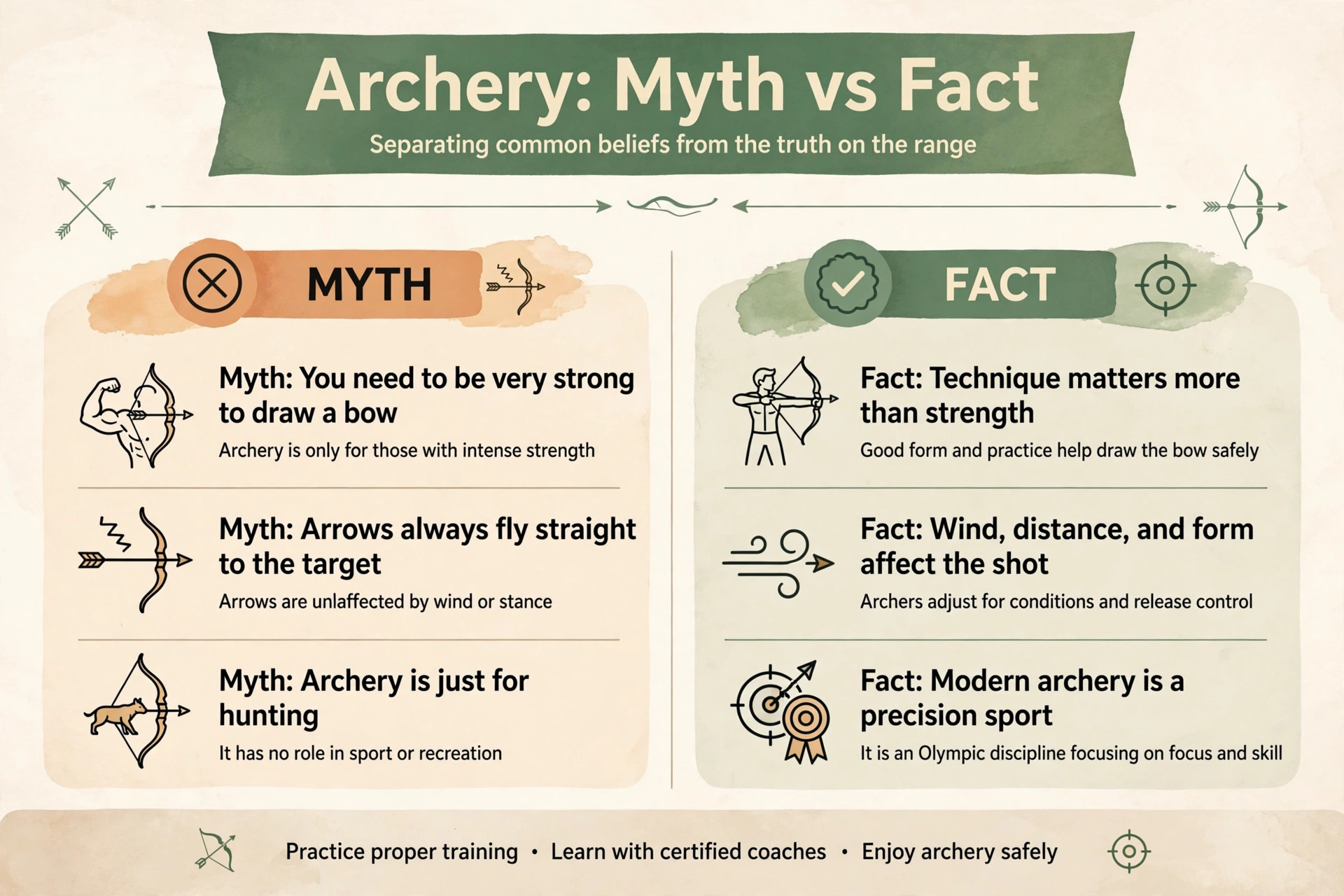
Myths vs Facts About the Teer Game
Because teer is unusual, it attracts myths. Here are the most persistent ones, separated from the facts.
Myth 1 – The results are fixed by the organisers
Fact: the result comes from a live archery event counted in public. Fixing it would require controlling the arrows of dozens of independent archers in front of witnesses, which is not a realistic proposition. The licensing regime and open counting exist precisely to keep the game honest.
Myth 2 – Archery skill decides the number, so experts can predict it
Fact: human skill is involved, but that is exactly what makes the outcome unpredictable. Even the best archers vary from day to day. Wind, light, fatigue, and pressure shift the count. Nobody can know the final total before the arrows are counted, which is why the game is classified as a lottery.
Myth 3 – Teer is illegal gambling hiding behind tradition
Fact: in Meghalaya, teer is a licensed lottery operated under state law, with tax paid to the government. Calling it illegal ignores the entire regulatory framework described above. It is, however, true that the legal game is confined to Meghalaya’s licensed system, and unofficial online versions fall outside it.
Myth 4 – You need special knowledge or formulas to play
Fact: buying a ticket requires no special knowledge. You choose a number between 00 and 99 at a licensed counter before the round closes. Anything sold to you as a guaranteed formula or secret system is a scam, not a strategy. This connects directly to the rule we follow on this site: we never publish predictions, common numbers, or betting tips, because no honest source can offer them.
Myth 5 – Tourists cannot watch or participate
Fact: the grounds are public events and visitors are welcome to watch. Participation rules are the same for everyone: adults aged 18 or older may buy tickets at licensed counters. The etiquette is simple: watch respectfully, do not disturb the archers during shooting, and understand the game before you spend money on it.
How Tourists and Newcomers Should Approach Shillong Teer
If you are visiting Shillong or encountering teer for the first time online, a little context goes a long way. Here is how to engage with the game the right way.
Watching the Game Respectfully
The best first experience of teer is as a spectator. Licensed grounds welcome onlookers, and watching fifty archers loose arrows in near silence is genuinely impressive. Arrive before the round begins, find a spot that does not block the archers or the officials, and keep noise down during shooting. Photography is usually tolerated, but ask before pointing a camera at individual archers. Remember that for the people around you, this is a daily ritual and a workplace, not a tourist show. The same respect you would bring to a local market or a place of worship applies here.
If You Decide to Participate
Participation is straightforward but comes with rules. You must be 18 or older. Buy tickets only at licensed counters, never from touts or through unofficial websites and apps. Set a small budget before you start and treat the ticket as the price of entertainment, not as an investment. Understand that the odds are what they are: one number out of one hundred per round, with prizes set by the licensed payout structure. If any part of that is unclear, watch a few rounds first. There is no hurry, because the game runs almost every day.
Reading Results Online
Most newcomers meet teer through result websites rather than at the grounds. When you read a result, you will see the date, the round (FR or SR), and a two digit number. That number is the last two digits of the arrow count from that round’s shooting. Our homepage carries the day’s headline results, and the archive pages let you look back at previous days. If you want to know more about who we are and how this site works, the about us page has the details.
Playing Responsibly – Read This Before You Play
Teer is a legal lottery in Meghalaya, for adults aged 18 and above only. Legal does not mean risk free. Every ticket you buy is money spent, and the overwhelmingly likely outcome of any single ticket is that it does not win. Play only with money you can afford to lose, set a firm daily limit, and never chase losses by buying more tickets. If you find yourself spending more than you planned, borrowing money to play, or hiding your spending from family, stop and seek help. In India, support for problem gambling is available through counselling services and helplines, and talking to a trusted person is always the right first step. The game will still be there tomorrow. Your financial safety matters more than any single round.
Frequently Asked Questions About What Is Shillong Teer
What is Shillong Teer in simple words?
Shillong Teer is a legal archery based lottery held daily in Shillong, Meghalaya. Archers shoot arrows at a target in two rounds, the arrows that hit are counted, and the last two digits of the count become the winning number. Players buy tickets choosing a number from 00 to 99 before each round.
Is Shillong Teer legal in India?
Teer is legal in Meghalaya, where the state government licenses and regulates it as a lottery and collects tax on it. Lottery law in India is decided state by state, so the legal status elsewhere depends on each state’s own rules. The licensed game operates through physical counters and grounds in Meghalaya, and adults must be 18 or older to participate.
What do FR and SR mean in Shillong Teer?
FR stands for First Round and SR stands for Second Round. They are the two archery sessions held each playing day, usually about an hour apart. Each round has its own ticket sales, its own shooting, and its own declared result, so there are two separate results every day.
How is the winning number decided?
After the shooting time ends, officials count all the arrows that struck the target. The last two digits of that total count become the winning number for the round. The counting is done openly at the ground so observers can verify it.
What is the history of Shillong Teer?
Archery has been part of Khasi culture for centuries as a hunting skill and a village sport. Informal archery contests with wagering existed around Shillong for generations before the state government brought the game under formal licensing and taxation, creating the regulated lottery that runs today.
Can tourists watch or play Shillong Teer?
Yes, tourists can watch the shooting at licensed grounds, which are public events. Adults aged 18 or above can also buy tickets at licensed counters under the same rules as local players. Visitors should watch respectfully, avoid disturbing the archers, and buy tickets only from authorised counters.
Where can I check the daily Shillong Teer result?
The result is declared at the grounds after each round and published by result websites shortly after. This site updates the Shillong Teer result page daily, and the teer result list keeps previous days for reference.
Conclusion
What is shillong teer, in the end, is a question with a richer answer than most lotteries offer. It is a game of arrows and numbers, yes, but it is also a licensed industry under Meghalaya law, a living branch of Khasi archery tradition, a daily social ritual, and a source of livelihood for hundreds of families. Whether you follow the results online, watch the archers at the grounds, or simply wanted to understand what the phrase means, you now have the full picture: how teer works, why it is legal, where it came from, and how to approach it with respect and responsibility. Check the daily results, enjoy the tradition, and always play within your means.